When Access Looks Like Liberation
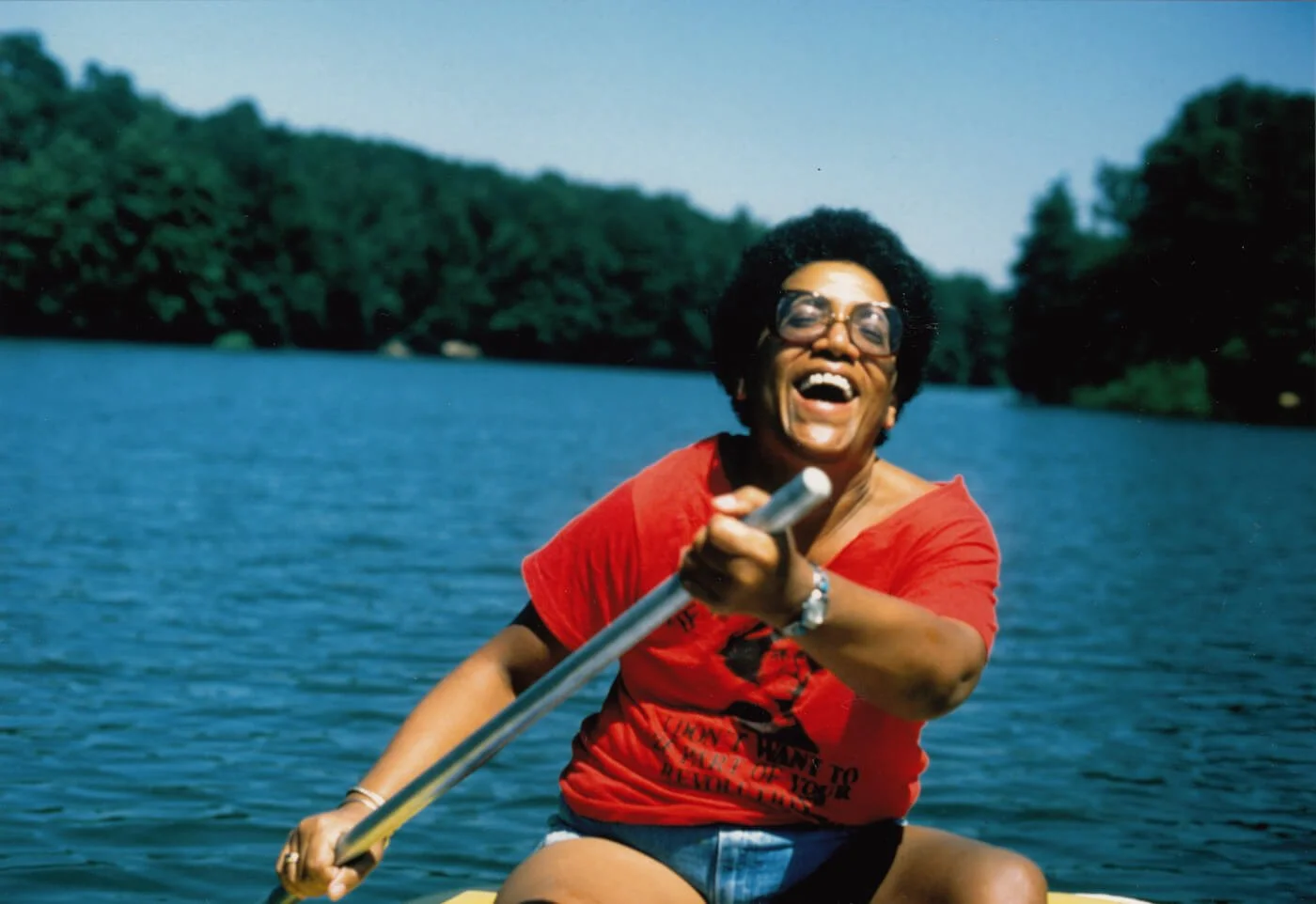
Audre Lorde on Krumme Lanke wearing an Emma Goldman T-shirt that reads “If I can’t dance I don’t want to be part of your revolution” in Berlin, 1984. Photograph by Dagmar Schultz.

Dr. Carl W. Kenney II is a professor at the Hussman School of Journalism and Media, where he teaches News Reporting & Writing and Community Journalism. He also serves as managing editor of The Durham Voice, a community-based news publication. An award-winning columnist, novelist, and prophetic voice at the intersection of faith and social justice, his works—including Preacha’ Man and My Daddy’s Promise—weave together theology, storytelling, and radical love. His writing has appeared in publications such as The Washington Post and The Christian Century, and his pastoral leadership has left a lasting impact. Learn More
“The master’s tools will never dismantle the master’s house.”
Audre Lorde wrote those words in an essay published in 1984, the same year Jesse Jackson mounted his historic campaign for the presidency.
It was a remarkable year for Black America.
Vanessa Williams, who had made history in 1983 as the first Black woman crowned Miss America, relinquished her crown. The Cosby Show premiered on NBC, becoming a cultural phenomenon by presenting a prosperous Black family at the center of American television. Georgetown coach John Thompson became the first Black head coach to win an NCAA men’s basketball championship.
On the surface, things appeared to be moving in the right direction.
But beneath the celebrations of Black achievement were less celebratory realities: persistent poverty, unemployment and widening economic disparities that limited the economic gains available to many Black families.
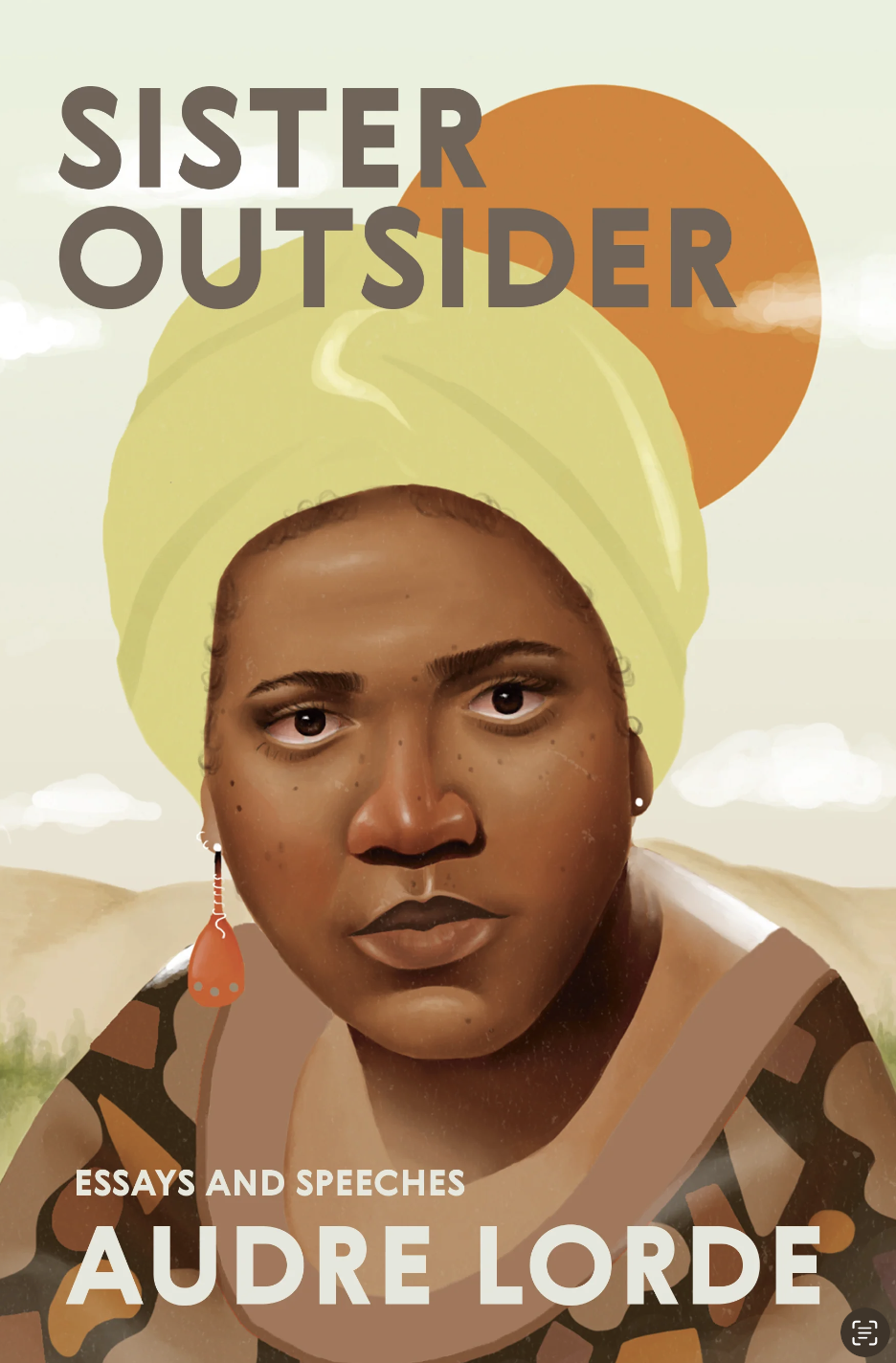
And in that same year, Lorde published Sister Outsider, a collection of essays and speeches that challenged the ways white-dominated institutions, including parts of the feminist movement, could marginalize Black women, poor women and other women of color.
Her argument was part of a broader Black feminist insistence on creating spaces, institutions and forms of publishing where people who had been pushed to the margins could speak without asking permission from the center.
That tension, between access and transformation, remains at the heart of Lorde’s work.
Consider what else was happening in 1984.
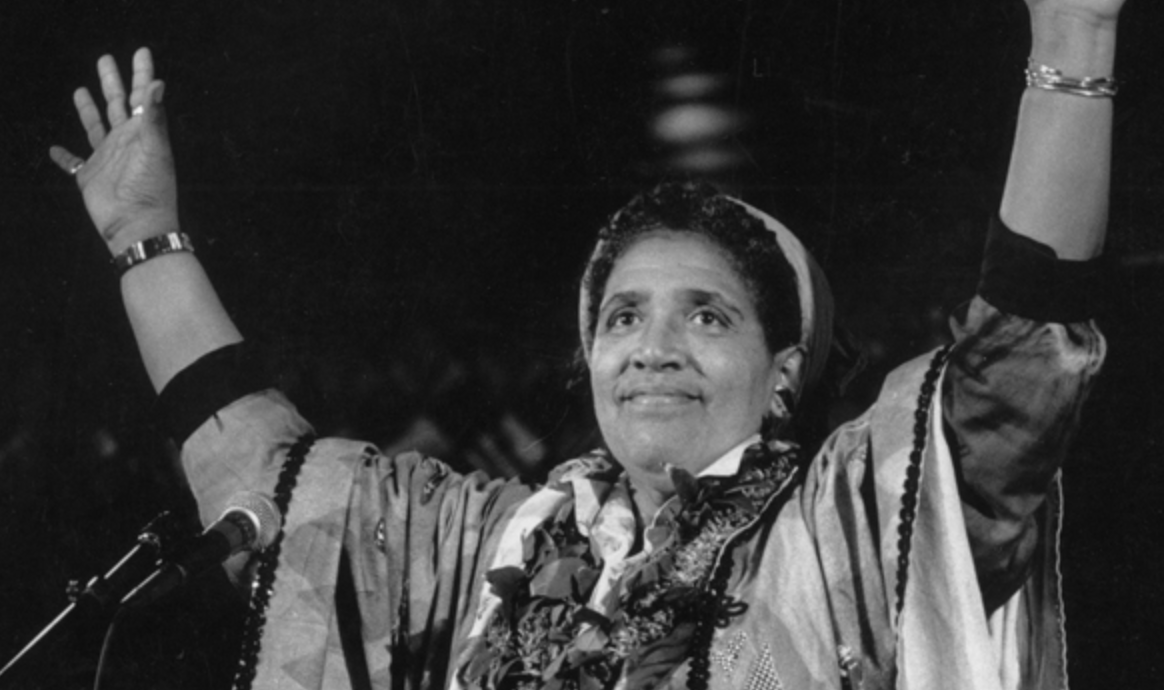
Audre Lorde. Contributed photo via the New York Amsterdam News, “Audre Lorde, Activist, Librarian, Lesbian and Warrior Poet,” December 22, 2016.
Oprah Winfrey was becoming a major television presence through AM Chicago, the program that would soon become The Oprah Winfrey Show. Carl Lewis won four gold medals at the Los Angeles Olympics. Russell Simmons and Rick Rubin’s Def Jam Recordings was taking shape, helping create the institutional infrastructure for hip-hop’s extraordinary cultural expansion.
Black achievement was becoming increasingly visible. And visibility mattered. Representation mattered.
Access mattered.
But Lorde was asking us to consider a question that achievement alone could not answer:
What happens when assimilation becomes so successful that some Black people begin defending the very structures that previous generations organized to transform?
Lorde was not arguing that Black people should refuse access to mainstream institutions. Nor was she suggesting that professional advancement, education, economic success or institutional influence were meaningless.
The problem was something more complicated.
She warned against confusing access to the master's house with liberation from the conditions that made the house necessary.
Black students were entering predominantly white colleges and universities in greater numbers. Black professionals were moving into institutions from which previous generations had been excluded. Black people were celebrating the significance of being the first: the first Black Miss America, the first Black coach to win an NCAA men's championship, the first Black astronauts and countless other breakthroughs.
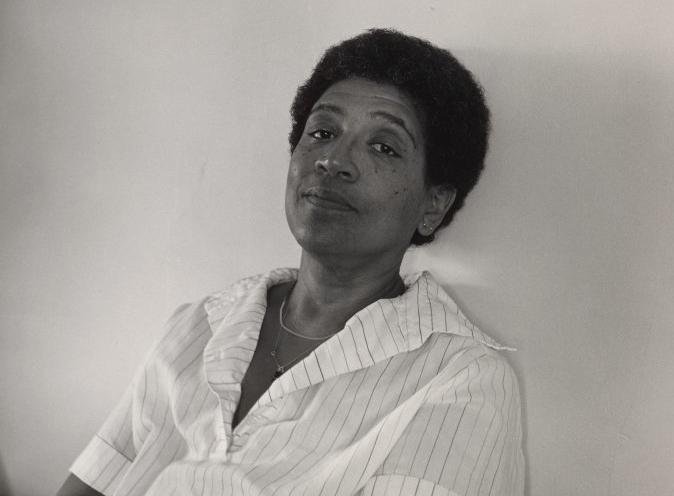
Audre Lorde, New Smyrna Beach, Florida, 1983. Photograph by Robert Alexander/Archive Photos/Getty Images. Featured in the New York Public Library exhibition “Seen: A Century of New York City.”
Those firsts mattered.
But a first can open a door without changing what happens inside the building.
That is the distinction Lorde forces us to confront.
The danger is not necessarily entering the institution. The danger comes when gaining entry becomes the measure of progress; and when those who have gained access begin defending the institution's existing rules because they have learned how to succeed under them.
In that sense, assimilation is not simply something white America does to Black America.
It can become something Black people participate in, reproduce and sometimes defend.
Professional advancement can become a substitute for collective advancement. Institutional acceptance can become a substitute for structural change. Respectability can become a substitute for resistance. Economic success can become a substitute for solidarity.
And proximity to whiteness can begin to look like liberation.
But being invited into the house does not necessarily mean the house has changed.
Lorde wrote that “our future survival is predicated upon our ability to relate within equality.” That idea points beyond representation toward relationships, power and structure. A system can become more diverse without becoming more equitable. A structure can become more inclusive while preserving many of the relationships that produced inequality in the first place.
That distinction is increasingly relevant today.
Look at the debates surrounding diversity programs, corporate inclusion, higher education, Black political leadership, the Black middle class, respectability politics, the retreat from protest, Black media, the Black Church and the growing emphasis on individual achievement over collective liberation.
The circumstances are different from 1984.
But the underlying question remains remarkably familiar:
What does it mean to enter institutions without becoming invested in preserving the conditions that keep others outside?
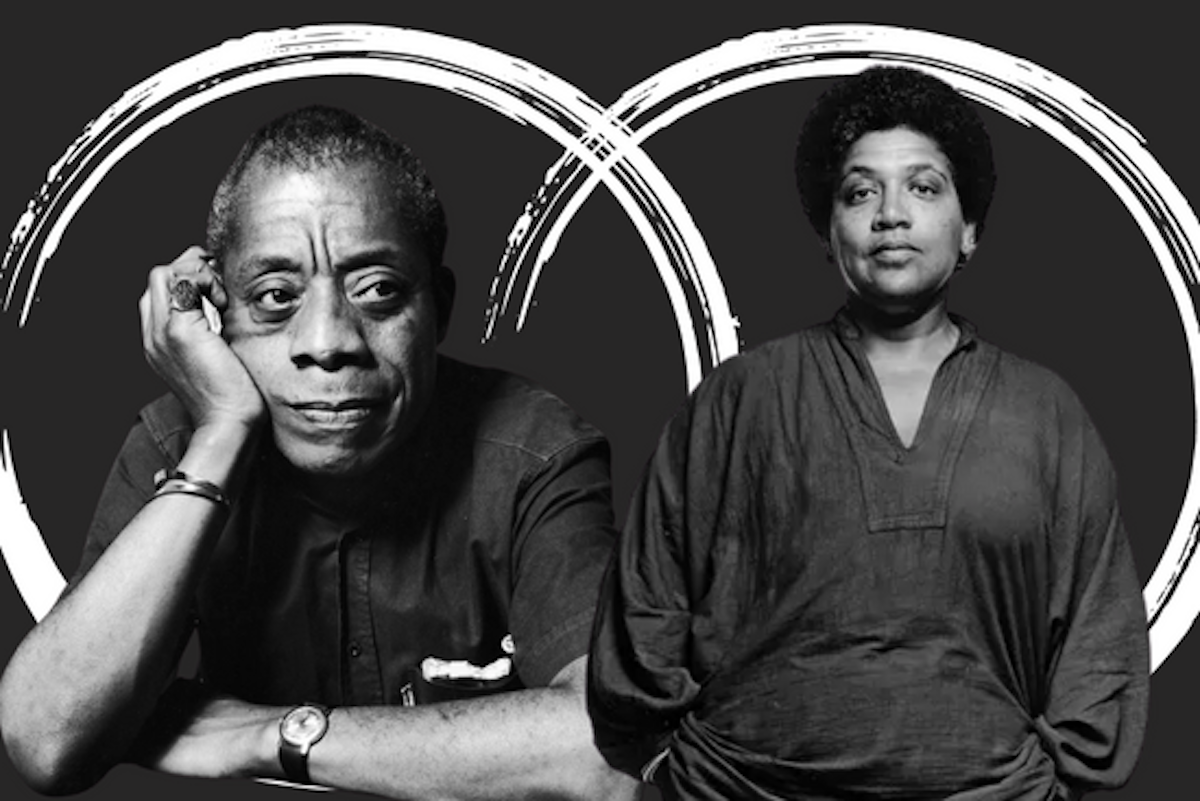
James Baldwin and Audre Lorde. Image courtesy of Union Theological Seminary, “The Dharma of James Baldwin and Audre Lorde,” February 27, 2023.
James Baldwin wrestled with a related problem; the psychological consequences of Black identity being constructed in relationship to a dominant white culture. He repeatedly challenged Americans to look beyond racial categories and confront the human beings living inside them.
Baldwin and Lorde approached these questions differently, but both force us to confront the consequences of allowing dominant structures to define the boundaries of Black possibility.
That is why Lorde's metaphor continues to haunt us.
The master's house is not simply a building.
It can be a university.
A corporation.
A political institution.
A newsroom.
A church.
A cultural institution.
A social hierarchy.
And sometimes, it can be an idea about what success is supposed to look like.
The tools can be degrees, titles, money, professional credentials, institutional access, political power or cultural influence.
None of those things are inherently wrong.
The question is what we do with them.
Do we use access to open doors for others?
Do we challenge the rules that determine who gets through those doors?
Do we redistribute power?
Do we create new institutions when existing ones refuse to change?
Or do we become so grateful for our seat inside the house that we stop asking why so many people remain outside?
That may be one of the most difficult questions confronting Black America today.
Because assimilation is most powerful when it no longer feels like assimilation.
It can feel like success.
It can feel like acceptance.
It can feel like progress.
It can even feel like liberation.
And perhaps that is why Lorde's words remain so unsettling more than four decades later.
Have we confused occupying seats in the master's house with dismantling the house?
And if the answer is yes, then there is an even harder question:
Are we using the master's tools to dismantle the master's house, or have we simply become better at living in it?
Reflection Questions:
When can access look like liberation without creating real change?
How can we use our access and influence to open doors for others?
RECOMMENDED READING