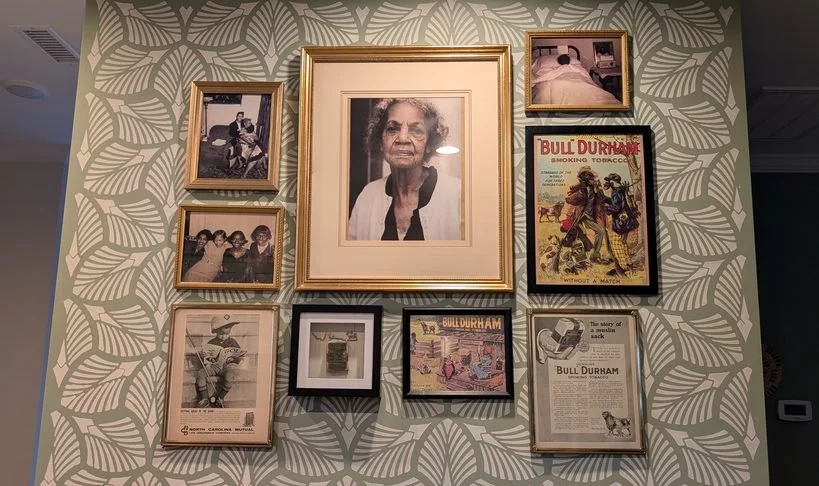
The beginnings of our museum wall in our home, which we call The Fannie Latta House, in honor of my ancestor, who once lived on our very street before being displaced by the construction of Highway 147.
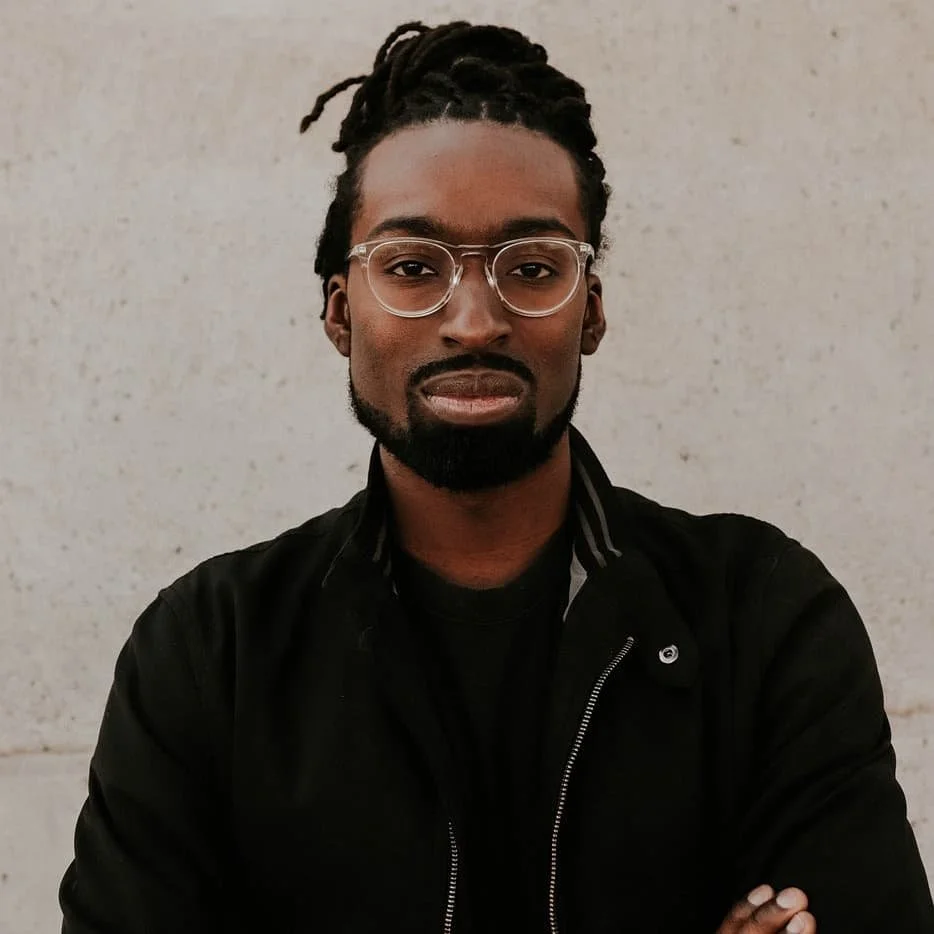
Kendall Dooley is a community development practitioner, scholar, and co-founder of BLK South, a nonprofit organization dedicated to reclaiming and revitalizing historic Black neighborhoods in the South. He holds a bachelor’s degree in Criminal Justice and Criminology, a Master of Arts in Missional Theology, and a Master of Theology. Kendall brings a deep commitment to improving the quality of life in under-resourced communities through holistic development, cultural preservation, and creative placemaking. His work is shaped by his passion for justice, Black history, and fostering spaces where communities can flourish on their own terms. Learn More
When settling back into our two-bedroom, one-bathroom apartment in South Central Phoenix after our honeymoon, Erin began purchasing decorations for our space. She started in the bathroom with a poster that read, “So fresh and so clean clean.” The poster was nailed to the bathroom wall without prior notice, and when I first noticed it, I assumed the quote, referencing the Outkast song, held some particular meaning for her. I asked her about it, and she insisted that it did not symbolize anything significant in her life or reflect any particular taste or distaste in music.
I was perplexed at the time because I was in the height of my seminary education, where formation and meaning had become extraordinarily important to me. My professors were rearranging the furniture in our minds, teaching us to recognize that every interpretation carries a bias. I was becoming increasingly aware that the culture I lived in was filled with biases communicated through stories, art, and both sacred and secular liturgies that shaped our understanding of what it meant to be a good Christian, American, and human being. I began asking questions: Who taught you how to interpret the world? Whose voices shaped the way you understand and make meaning of life's experiences? And perhaps more importantly, whose voices have been absent?
Our current home in Durham is named the Fannie Latta House in honor of my great-grandmother, a working-class Black woman who lived in this neighborhood but never owned her home. We have pictures on the walls telling her story and reminding us of the lessons we can learn from her life and the era in which she lived. Seeing this artwork each day reminds me of where I come from, whose shoulders I stand on, and the story I choose to live in and make meaning from. I am intentionally allowing her experiences, perspectives, and yes, even her biases, to inform how I understand the world.
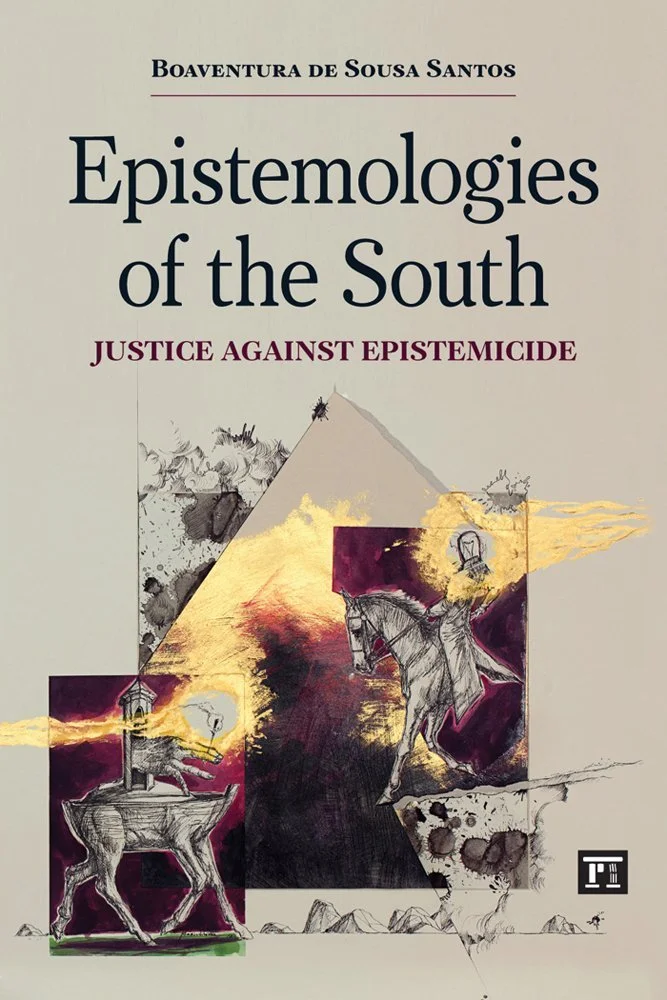
Boaventura de Sousa Santos, in Epistemologies of the South, challenges us to recognize that the dominant ways of knowing the world have historically rendered other forms of knowledge invisible. His critique of representation reminds us that what we see and recognize as important is often determined by the perspectives and interests of those who have the power to represent reality. What gets represented is never the whole story. Some experiences are elevated as universal truths while others are dismissed as irrelevant, inferior, or simply nonexistent.
My great-grandmother's life may never have appeared in a history textbook or been recognized as a significant source of knowledge by the institutions that shaped my education. Yet her life carries wisdom about labor, land, belonging, displacement, and what it means to survive and build community in a world that did not always recognize her humanity. By placing her story on our walls, I am doing more than remembering an ancestor. I am choosing whose knowledge deserves to be seen, whose experiences deserve to be taken seriously, and whose interpretation of the world will help shape my own.
Aisha Thomas captures the importance of representation with her quote, “Until society represents everyone, the questions will always be: Where do I belong? Do I belong?”
This question reveals that representation is not merely about visibility. It is about belonging, identity, and whose humanity is recognized. When we do not see ourselves, our ancestors, or our communities represented in the stories society tells, we are left wondering whether our experiences matter and whether there is room for us in the world being imagined.
This is why representation matters, particularly when Indigenous leaders, Black women, and others who have historically been excluded become the first to occupy positions of leadership and influence. Regardless of our political disagreements or biases, there is something worth celebrating when people whose histories and perspectives have been pushed to the margins become visible in places where decisions are made and stories are told.
Santos pushes us to go further. Representation cannot end with simply placing different faces within the same systems of power. It must also challenge whose knowledge is considered legitimate, whose experiences inform our decisions, and whose voices are allowed to shape our collective future. It is one thing to be represented in a world someone else has imagined. It is another thing entirely to participate in imagining the world itself.
Perhaps this is what I am learning from the pictures on the walls of the Fannie Latta House. I do not simply want to see my great-grandmother represented. I want to learn how to see the world through the wisdom her life offers. I want her story to shape the questions I ask, the people I listen to, and the future I help imagine. Because representation at its best does more than answer the question, “Do I belong?” It reminds us that we have always belonged, even when the world failed to recognize us.
Reflection Questions:
Whose stories have shaped how you see the world, and whose stories have been missing?
What wisdom from your ancestors or community could help shape the future you imagine?
RECOMMENDED READING