It Smells Like Something I’ve Seen Before
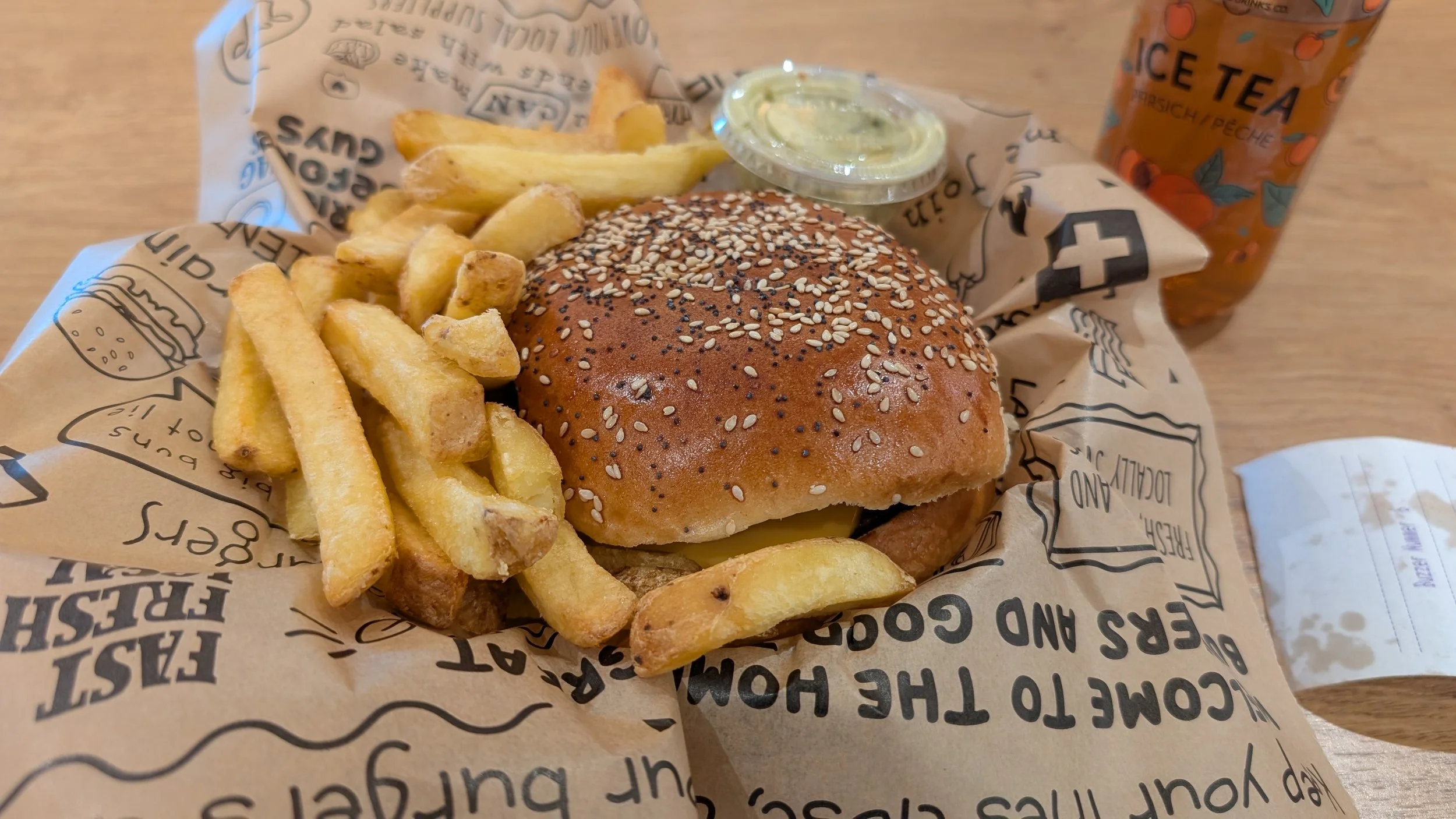
Hungry at the Zurich, Switzerland airport, I grabbed something familiar. (Oct. ‘25)

Erin Dooley is the co-founder of BLK South and Neighborhood Chaplain in Durham, NC. With over twenty years in nonprofit leadership, pastoral ministry, and strategic communications, she has led numerous faith-based and community initiatives. A Master of Community Leadership graduate at Eden Theological Seminary, Erin’s work explores the intersection of theology, human behavior, and social change—creating spaces of healing and belonging for historically marginalized communities.
There’s something about smell that gets there first—before language, before logic, before we even know what we’re feeling. Smell slips past the guards. It fills the nostrils, settles on the tongue, and suddenly the body remembers something the mind hadn’t named yet.
Smell teaches us how to recognize patterns.
When I smell a grill, my body already knows what’s coming. My mama’s week-long marinated drumettes. Or that blackened salmon—seasoned just right with butter and Chef Magic’s blackened seasoning—and yes, topped with a little ranch. BABY. My mouth starts preparing before the plate ever hits the table. Smell carries memory. Smell carries expectation. Smell tells the truth before the words arrive.
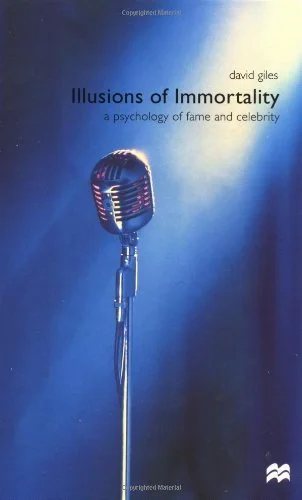
And lately, as I’ve been thinking about fame—reading Illusions of Immortality and watching how celebrity culture moves through our world—I’ve had this persistent feeling:
This smells like something I’ve seen before.
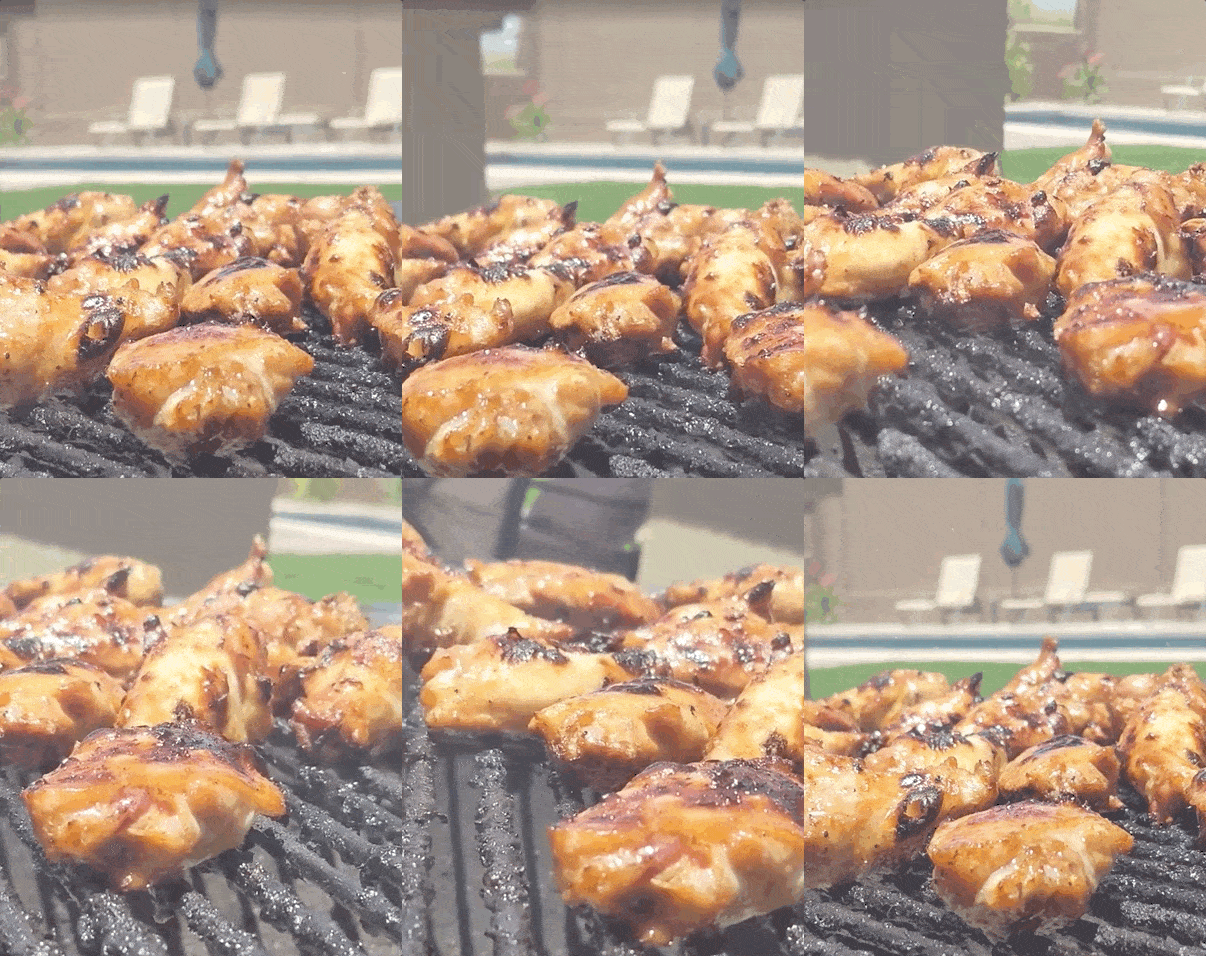
Grilling my Mom’s famous “drummetts” for Neighborhood youth. (June ‘23)
While looking for material on the psychology of fame, I came across Illusions of Immortality: A Psychology of Fame and Celebrity by David Giles. About halfway through the book, I realized it was giving me language for something I’ve been sensing for a long time—but hadn’t yet named.
Smell works like that. It reaches the body before the intellect. It helps us recognize patterns before we can articulate them. When something familiar is in the air, the body knows.
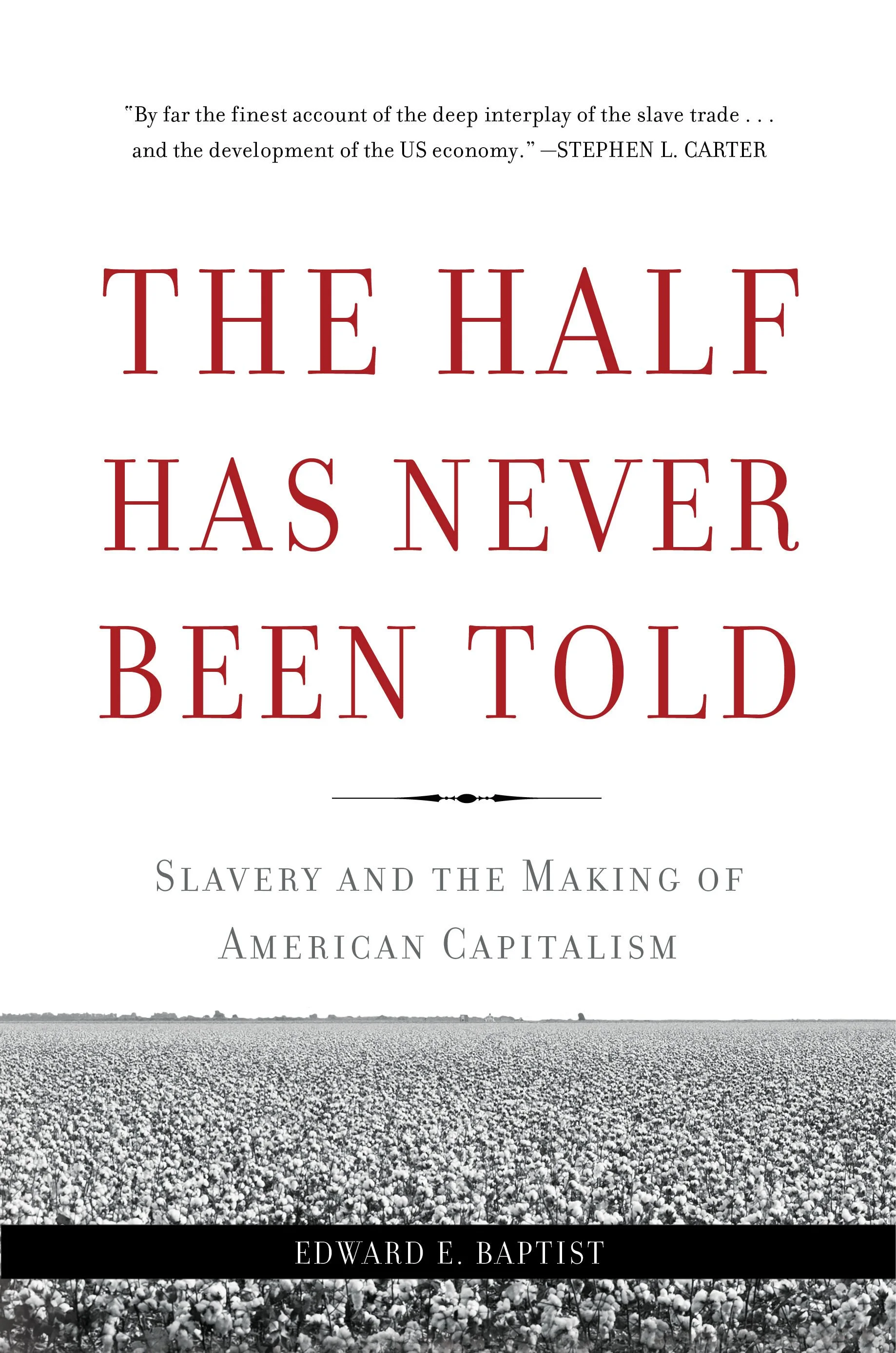
Giles does important work helping us understand what fame is: why people desire it, how it’s produced, and what it does to those who pursue and attain it. What the text cannot fully account for, however, is how deeply capitalism is intertwined with the desire for fame. For many people today, fame is not primarily about recognition; it is imagined as a pathway to survival—to healthcare, rest, security, and the ability to live with dignity. In that sense, fame becomes equated with the opportunity to live humanely.
At the same time, systems of power profit from the commodification of other people’s images. Fame and fortune are dangled together like a carrot. For those who control the system, fame is revenue. For those chasing it, fame is hope. Incentive and extraction become inseparable.
What interests me most is what happens after the carrot is reached—the largely hidden world of fame. The pressure to maintain a public persona. The weight of parasocial relationships. The paradox of being hyper-visible and yet profoundly unknown. I’ve been calling this “celestial dragonness,” borrowing imagery from One Piece to name the experience of being insulated by visibility, power, and image while quietly losing access to ordinary human life.
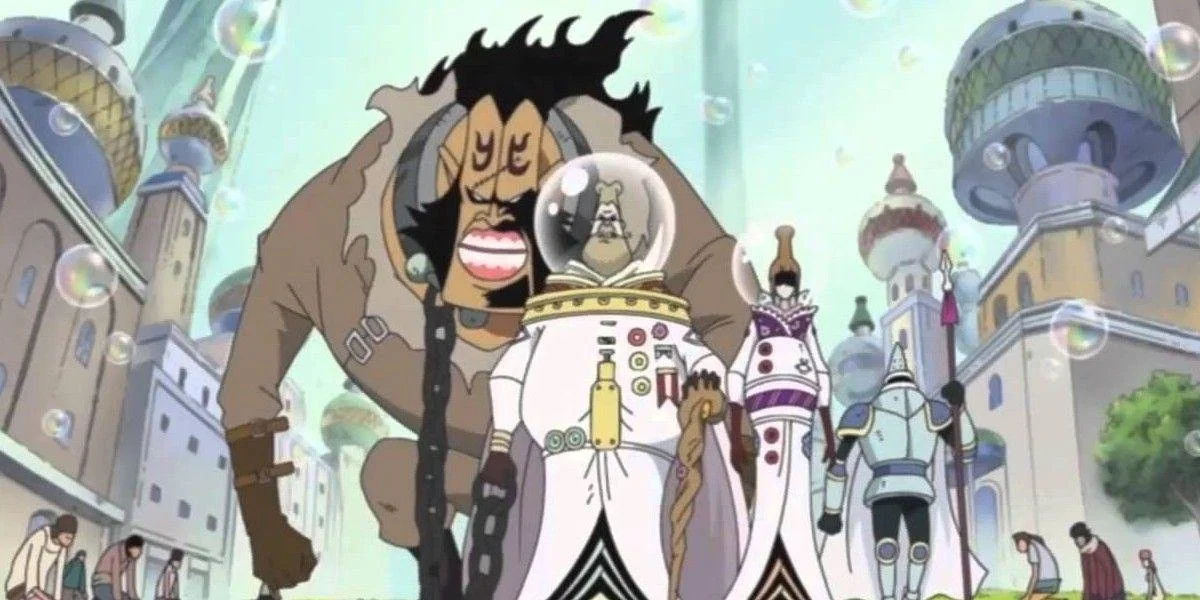
An animated scene from One Piece depicts a towering, chained man leaning menacingly over a much smaller figure — a celestial dragon— encased in a white, astronaut-like suit beneath floating bubbles and futuristic domed buildings, while guards stand watch and civilians bow in submission.
I see this dynamic everywhere: in celebrity culture, in TikTok’s “Helping the Homeless” genre, , where creators film themselves approaching under-resourced community members and attempting to help them—either by first asking them to “help” in return as a way of removing an invisible barrier to entry, or by walking up to strike up a conversation. Often, those being “helped” are unaware that they are being filmed, while their vulnerability is used to pull on the interest and heartstrings of viewers.
Although many creators may have good intentions and many people’s lives have been changed by these acts, it is still predominantly white-presenting men who are positioned as rescuers of poor Black families—particularly Black women. The narrative it creates often suggests that if someone powerful or visible “comes to save me,” and if they are famous enough, then a large public audience can give to me and change my life. Again, in this case, fame is directly tied to the opportunity to live humanely.
Kindness itself isn’t the problem. Generosity isn’t the issue. But social media has a way of pulling our attention far away—mobilizing care at a distance—while distracting us from what’s happening right under our noses. We begin to care everywhere except where we live.
And this is where we must begin to pay attention to smell.
Because all of this—the illusion, the performance, the extraction—it smells like systems we already know. Systems that promise life while quietly consuming it. Systems that turn people into images, stories, commodities. Systems that train us to look up instead of around.
So, let’s learn to trust our noses.
To notice what’s in the air.
To ask what kind of life a system is actually offering.
To remember that what sustains us has always been close, local, and shared.
Reflection Questions:
What in your life or community “smells familiar”—something that promises hope or security, but doesn’t quite feel right when you pay attention to it?
Where do visibility or popularity seem to shape who has influence around you, and what would it look like to value care and presence over image or performance?
R E C O M M E N D E D R E A D I N G