A Working Theology of Squinting
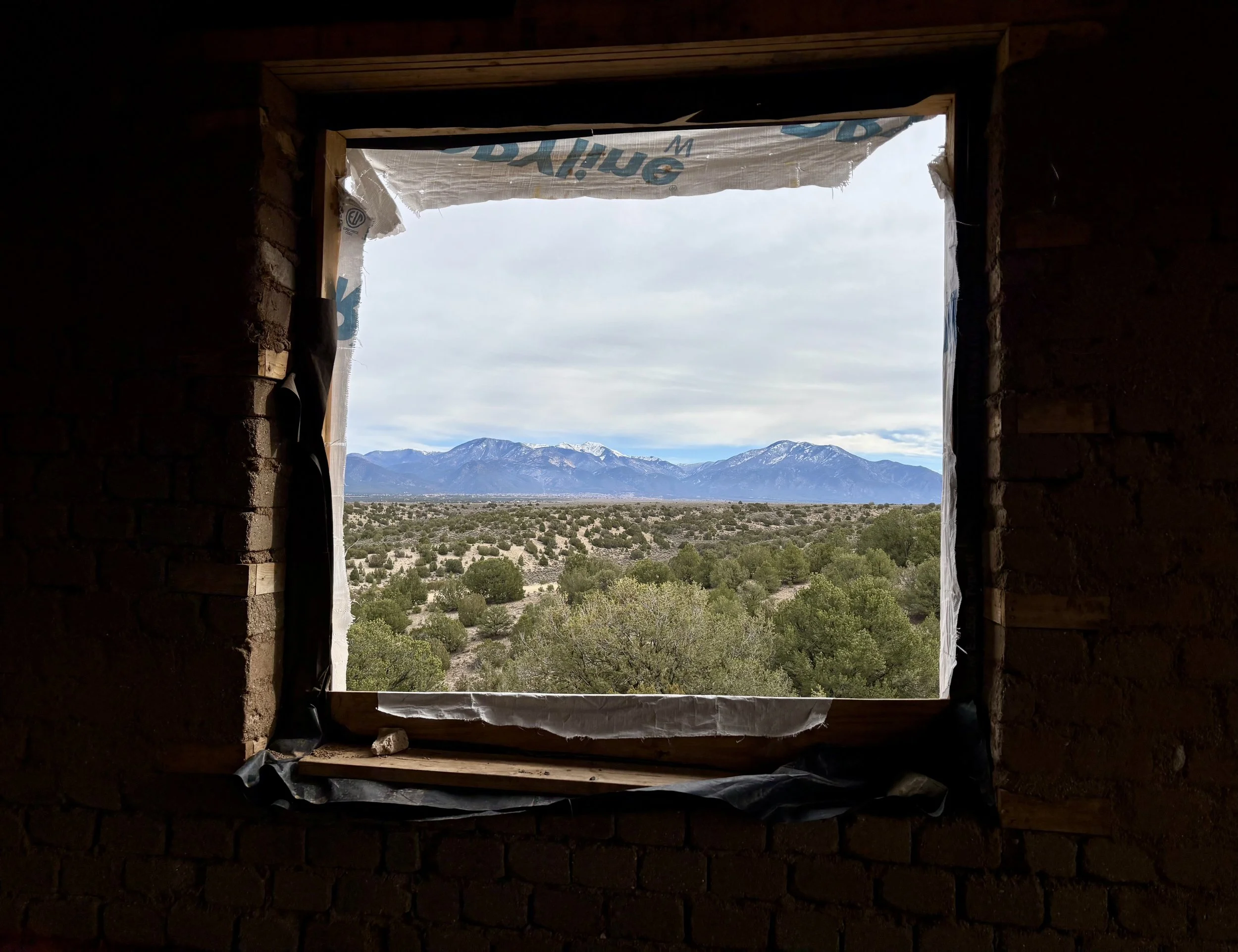
From the window of our earthen home in Taos, NM.

Dr. Chris Townley has been a trusted friend, accomplice, colleague, and pastor for almost two decades, faithfully engaging in the good and challenging work of justice and community building. He is a gifted writer and in 2024 completed his dissertation, A Trinitarian Vision for Shared Leadership: Embracing Hospitality as a Transformative Pathway, which will soon be published as a book! We are honored to count him among our dearest friends and to have him serve on our Board of Advisors for BLK South. Learn More
While reviewing my recent writing I noticed a theme I didn’t expect to find. And I didn’t need to squint to see it. One search for the word “squint” in my Google Drive and the list populated down the page. Perhaps I’d overdone and overused the metaphor or maybe I haven’t squeezed tight enough. The shape of my heart has been a squint for the last year or so and that’s the source of the writing.
Squinting to see the goodness in all the wreckage of our country’s catastrophes, and all the fissures of my inner being, and all the changing seasons of dust, wind, and snow. I’ve been squinting into the breeze and the dawn and the sleet for a subtle peek of the divine.
Show yourself Heavenly Pine, New Mexico Sky, Taoseño Brother, Rio Grande Cutthroat.
And in this practice of squinting, which is in fact all of life, not a seasonal spiritual discipline as I once thought, I have fermented a theology of squinting without meaning to. I did not see it coming because my eyes were not wide open. As you now know, I’ve been squinting.

Eyes trying to see…
To squint is to flex the muscles of the face and it is hard to avoid frowning and furrowed brows. It is no way to live for always but it seems to be a necessary way to live for sometimes. And that sometimes is the present because I want to see, even if I have to strain, the goodness of the Rio’s green skin, and juniper titmouse’s mohawk, and the wrinkles I’ve given to my wife in both love and defiance.
Gary Snyder says, “There is another kind of practice which also is habitual and periodic, but not necessarily as easily or clearly directed by the will: that’s the practice of necessity.” For today it is necessary to squint if I am to see the Great Spirit’s presence, and perhaps one day I will stop straining, eclipsed by the pulse of Love as pure as the return of my wife while we continue sculpting our home from the mud. If we squint, we can see it forming, like clay shaped by Creator. And it is good.
_______
I squint to find the humanity of people like Donald Trump, Pete Hellseth (I know his real name), masked ICE agents, bomb dropping drone operators, my (former?) friends who pump the ideology of Charlie Kirk, those who poach elk for their skulls…
I squint to find a glimmer of goodness in the shattered souls of our algorithm driven hot takes and I fear I’ll need a new prescription as my contacts run dry. I fear I’ll be squinting for the rest of my life but you don’t have to squint to see the racism on display as MAGA removes MLK Day and Juneteenth from the list of days for free entry into our National Parks. I am squinting to find the goodness and if I’m honest, I have to retreat to the (high) desert to find it, absent of most human beings, who were, as I believe, created good, and are still good, at the core, somewhere down in the depths, but it is bordering on blind exhaustion to see it. How long, O Lord, must I keep squinting?
Reflection Questions:
Where in my life am I squinting just to keep seeing goodness—and what is that telling me about what I need right now?
When squinting starts to wear me down, what might it look like to pause, rest, or stop forcing myself to see clearly?
R E C O M M E N D E D R E A D I N G