A Christmas Question for a People in Search of a Sign
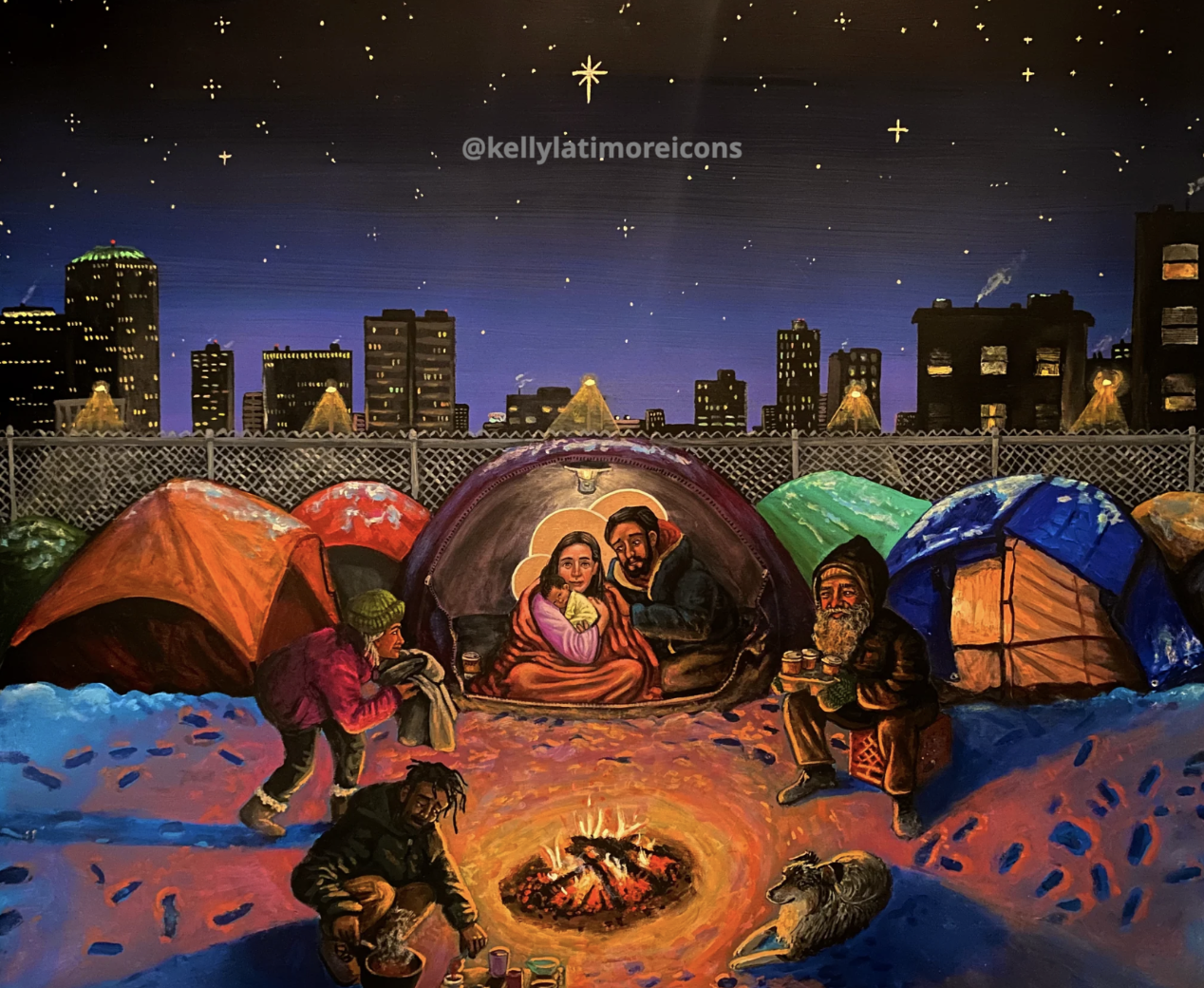
Tent City Nativity by Kelly Latimore

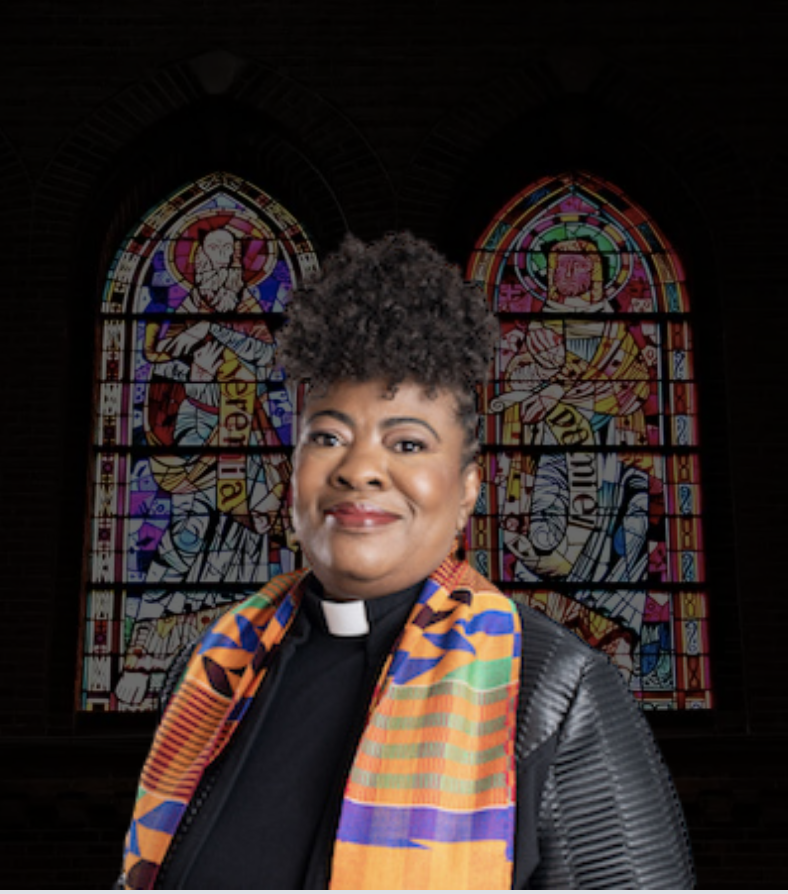
Rev. Dr. Cassandra Gould—widely known as the Pastor in the Public Square—serves as the Director of Political and Cultural Engagement at Faith In Action, a national community organizing network and is an Itinerant Elder in the African Methodist Episcopal Church. A public theologian, pastor, and organizer with over 30 years of experience, she is nationally recognized for integrating biblical justice with public engagement and for her advocacy against financial predation. A gifted writer, her mentorship and coaching were instrumental in helping us birth BLK South, and we are deeply honored to have her serve on our board. Learn More
Last month, I wrote about hearing, confessing that I often have to close my eyes in order to listen well. It feels fitting, then, that I am now tasked with reflecting on seeing. Advent, after all, is not only a season of waiting; it is a season of learning where to look.
Sunday I received a text message that has stayed with me. Someone close to me shared their deep disappointment with worship at their church on the final Sunday of Advent. The sermon made no reference to the birth of Jesus. It wasn’t simply that the message failed to meet expectations; it failed to offer a vision. What they needed was not merely something to hear, but something to see.
Trying to be gracious to the colleague who was preaching, I suggested that perhaps the preacher was saving the Christmas story for Christmas Eve or Christmas Day. The response came quickly: “Rev., we don’t have any of that. There were no candy canes, children singing Christmas songs, or portraying angels, or shepherds. There was no manger!” They concluded, “I didn’t see anything that pointed to Mary’s baby.”
I have sat with that all week. In the midst of political and social upheaval when a living current president inscribes his own name onto an iconic cultural institution meant to memorialize a fallen president, when renaming begins to resemble grave desecration, when the Department of Defense gives us a sign by becoming the Department of War, and troops line streets near my house and in a city near you, the person who text sounded less like a complainer and more like King Ahaz in Isaiah 7.
They needed a sign. Isaiah 7:14 records the divine interruption as follows: “Therefore the Lord himself will give you a sign. Look, the young woman is with child and shall bear a son, and shall name him Immanuel.”

The United States Department of Defense (DoD),also referred to as the Department of War (DOW) headquartered at the Pentagon in Arlington County, Virginia. (photo by U.S. Air Force Staff Sgt. John Wright. Washington, D.C., May 15, 2023.)
During Christmas, this text is often sentimentalized and as Dr. Wil Gafney reminds us erroneously interpreted. “There is no virgin.” The original context is anything but soft miraculous. Ahaz is a king facing military threat, political instability, and national fear.
High place of power, yet he is desperate for reassurance. GOD does not offer him weapons, alliances, or empire-building strategies. GOD offers him a child. A sign not of domination, but of presence. Immanuel, GOD with us.
The sign is not dominance.
The sign is vulnerability.
The sign is life gestating under threat.
Christmas has trained us to romanticize this scene, but Black biblical interpretation refuses that move. We know too much, let me use my I voice. As one who was a teenage mother, I know too much about what it means for a young woman’s pregnancy to become public spectacle, social liability, fodder for an often erroneous projection of statistics and moral judgment all at once. We collectively know what it means for bodies, especially poor bodies, Black bodies, queer bodies, differently abled bodies, non white bodies, to be read as problems rather than promises.
That is why the question “What do you see?” is never neutral.
From a Black Church perspective, this matters. Our theology has always known that GOD’s signs rarely appear where power expects them. Enslaved Africans learned to see GOD not in the master’s house, but in the hush harbor. Black mothers saw divine promise in babies born into systems determined to crush them. The Church learned to read scripture with one eye on heaven and the other on the ground.
People are still looking for that kind of sign.
In a season rife with grief, when many are fighting to survive the weight of a “blue Christmas” people want to see a way out. Ask me how I know. They want to see something that points not merely to a holiday, but to what Christmas proclaims: that GOD comes among us and is with us. That salvation arrives without spectacle. That hope is born into danger.
The hip-hop hymn writer, Tupac Shakur’s “Brenda’s Got a Baby” is not far from Isaiah 7. Brenda, like the “almah" in the text, is young, vulnerable, unseen, and carrying life the world refuses to protect. Brenda’s body becomes a site of neglect rather than promise. Tupac forces us to look; I mean really look at what happens when society refuses to see the sign God has given.
Brenda’s got a baby.
Mary’s got a baby.
The question is not whether the child is born, but whether we see what God is doing through them.
Sweet baby Jesus is not escapism. He is divine solidarity.
So when I am asked, “What do you see?” I see people searching for the light like Ahaz, like the person who texted me looking for evidence that GOD has not abandoned the world. I see a political landscape adorned with ornaments of terror, regimes decorating the public square with fear and cruelty. But I also hear GOD’s command echoing through Isaiah: Look.
Not to the seats of power.
Not even first to the pulpit.
Look to the lowly places.
Look among young women bearing the weight of the world.
Look among LGBTQIA+ siblings surviving spiritual and physical violence.
Look among Palestinians, Haitians, Somalians.
Look among Black and Asian communities disappearing without headlines.
Look among immigrants of every shade and story.
Look among the 24 million who will pay more for healthcare because Congress went on vacation before doing its job.
Look among the deported and detained.
Look among bodies that we deem disabled.
Look among the economically disempowered.
There is where the promise is being fulfilled again.
This is where Christmas demands that the Church recover its sight. Advent is not about nostalgia; it is about discernment. The question is not whether Christ is born, but whether we recognize him when he shows up in unlikely places.
What do I see?
I see opportunity, holy ground for the Church to capture the attention of those who are already looking and to lead them back to themselves. The birth of Jesus reminds us of a truth as uttered by June Jordan, “We are the ones we have been waiting for.”
I see an invitation for the Church to be Church “beyond the walls” and to become a living sign in a world desperate for vision. To point not only to a manger, but to a movement. To help people see that Immanuel still walks among us.
This Christmas, the question before us is simple and unsettling: What do you see?
R E C O M M E N D E D R E A D I N G