
Free Yourself: Hearing Wealth Differently
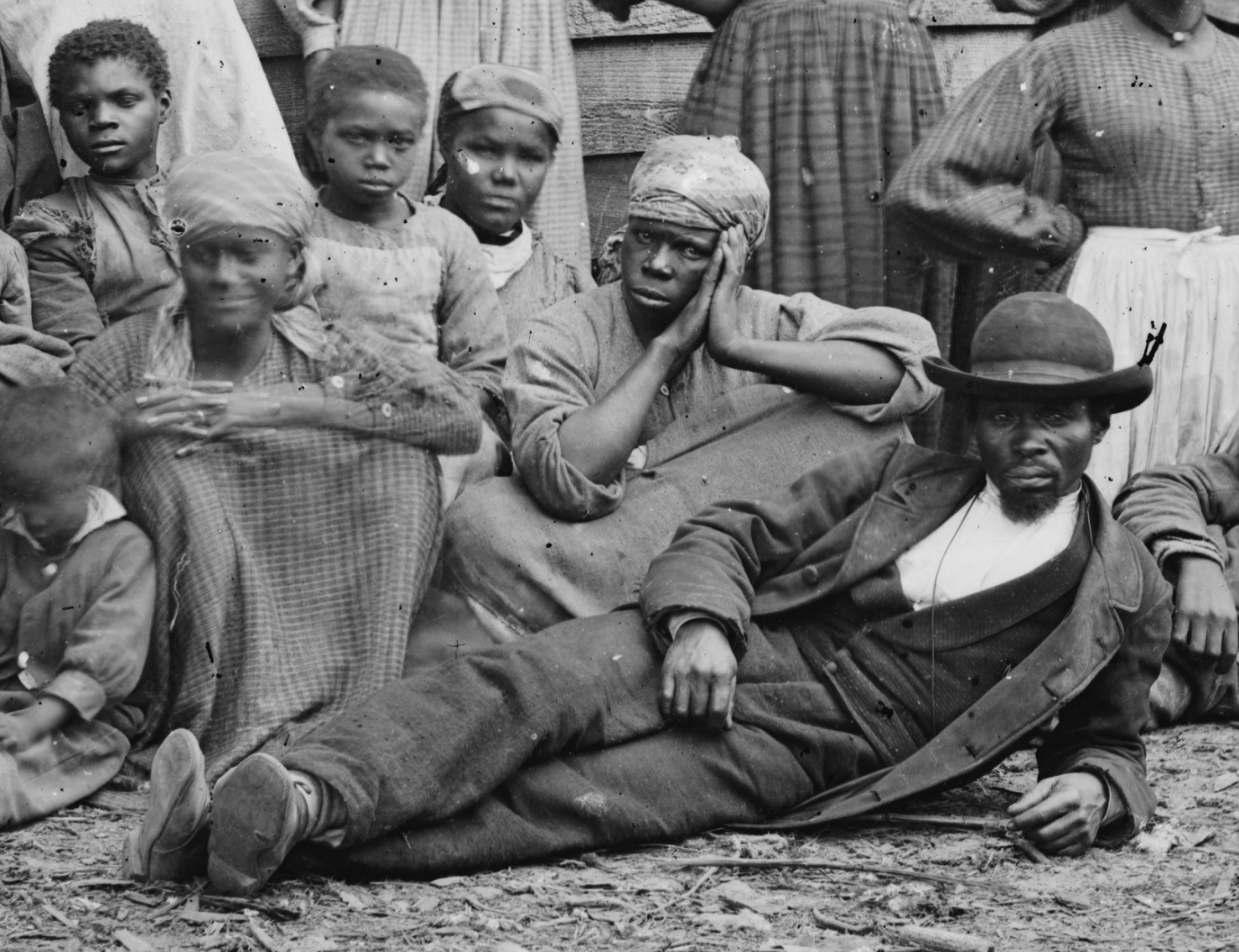
Enslaved African Americans designated as ‘contraband’ at a Union encampment, Cumberland Landing (Foller’s Farm), Virginia, May 14, 1862. Photograph by James F. Gibson. Courtesy of the Library of Congress, Civil War Glass Negative Collection.

Erin Dooley is the co-founder of BLK South and Neighborhood Chaplain in Durham, NC. With over twenty years in nonprofit leadership, pastoral ministry, and strategic communications, she has led numerous faith-based and community initiatives. A Master of Community Leadership graduate at Eden Theological Seminary, Erin’s work explores the intersection of theology, human behavior, and social change—creating spaces of healing and belonging for historically marginalized communities.
The other day, I turned in my Master Thesis Capstone Project at Eden Theological Seminary. Finishing that work has only deepened the questions stirring in me. As I consider PhD research, I’ve become increasingly enchanted with theological formation—specifically with what theology forms people to be. I’m compelled by the question of what kind of neighbors churches and other spaces shaped by rituals, songs, and formative practices are producing. I don’t believe enough critical thought is given to this—either by those doing the forming or by those receiving the formation.
Perhaps that’s why, lately, I’ve been listening more closely—not just to the world around me, but to the echoes within me. What do you hear when you sit with the truth of your own formation? What do you hear when you listen for what your faith, your church, your practices are shaping you to become?
That listening has carried me into another layer of reflection, especially as we are in an active season of fundraising for BLK South. I’ve been reflecting on my own complex relationship with asking for money. I’ve never liked it. Mostly because the entire world is structured against Black women—particularly women like me who refuse to shrink. I know, deeply, that the world does not naturally move to support us. Especially not the liberated version of me—the version willing to tell you about yourself, to tell the truth and refuse to silence it. Folks preferred the quiet, compliant version, the one who went along with everything, the one they could hold up as the supreme example of assimilation. But God forbid she becomes aware of her own value—because then she’ll start saying things that can’t be repeated.
Still, raising money is something we must do, because without it we cannot do the work our souls long to carry out.
Lately, I’ve been thinking even more deeply about this: What does it mean for a descendant of enslaved people—particularly a Black woman whose foremothers were bred like cattle to create America’s wealth—to now use her voice to ask for that wealth back? To reclaim the very wealth extracted from our bodies and redirect it toward the flourishing and freedom of Black people?
This reflection has led me to revisit some historical context about how Black women’s bodies were used as reproductive labor in slavery—bred like cattle for profit. Here are a few grounding facts:
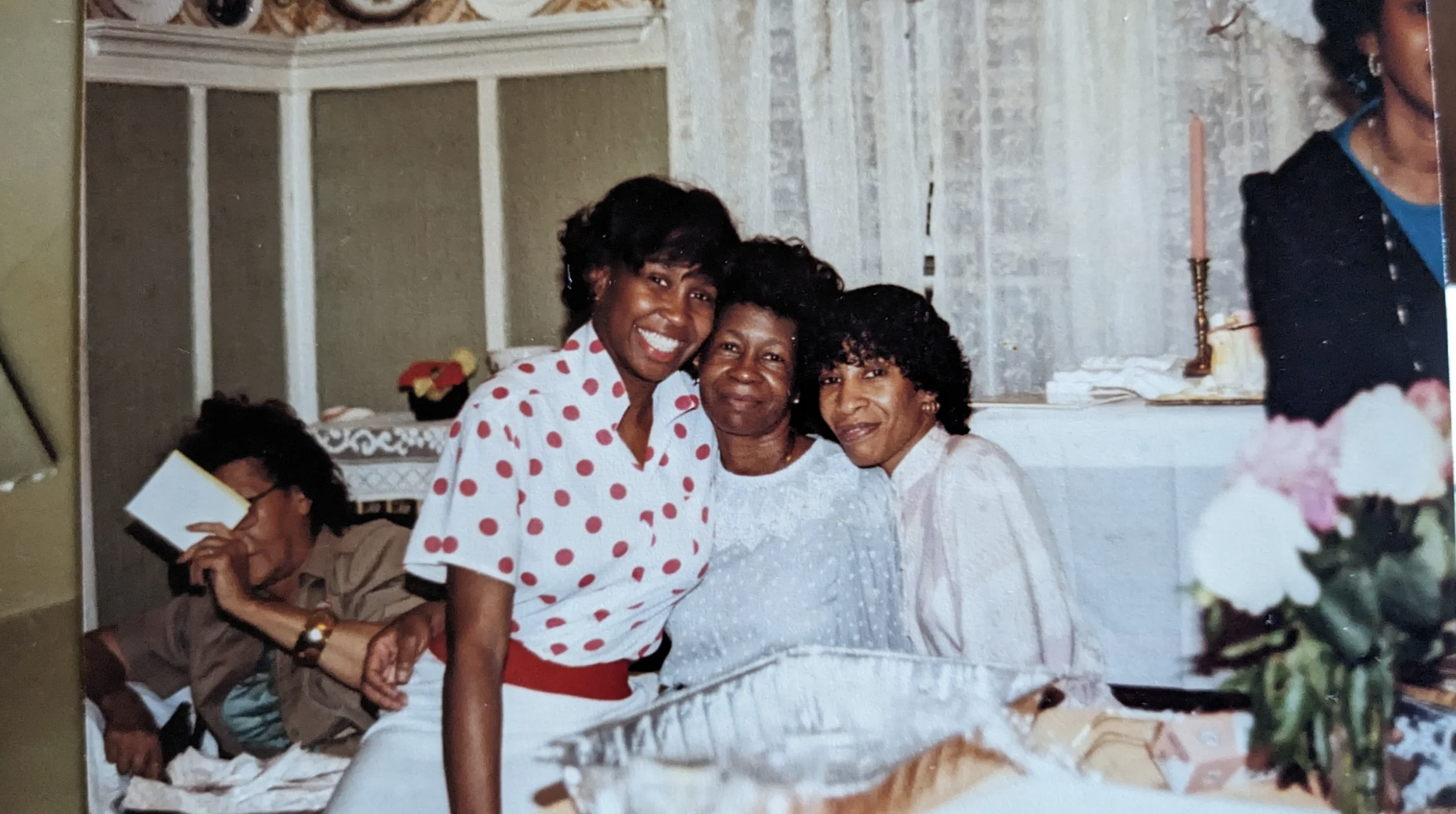
My mother, Theresa Lashley, pictured with my late Granny, Christine Moore Willie, and my late Auntie Betty-Ann—standing in the house that became our family’s refuge after fleeing Mississippi.
Enslaved Black women’s bodies were systematically exploited as reproductive labor essential to the economic expansion of American slavery. After the 1808 ban on the Transatlantic Slave Trade, enslavers increasingly relied on the forced reproduction of Black women, treating them as “breeders” whose childbearing capacity constituted a primary source of profit.¹ Enslaved women were coerced into pregnancy through rape, forced pairing, and what formerly enslaved people called “breeding farms,” practices widely documented by historians of slavery.² Enslavers openly calculated the monetary value of women’s fertility—Thomas Jefferson himself wrote that a woman who bore a child every two years was “more profitable than the best man of the farm.”³ Their reproductive capacity became a quantifiable asset, with enslaved girls and women assessed, priced, and sold based on their “breeding age” and perceived fecundity.⁴
Legal structures ensured that this reproductive exploitation translated directly into financial gain. The doctrine partus sequitur ventrem (1662) mandated that a child’s status followed that of the mother, guaranteeing that every child born to an enslaved woman increased the enslaver’s property holdings.⁵ Women who did not reproduce were often punished, traded, or beaten for “failing” to generate profit.⁶ As scholars have shown, this fusion of law, violence, and sexual coercion made Black women’s reproduction central to the maintenance of the slave system, turning their bodies into instruments of capital accumulation.⁷
What often goes unspoken in our national memory is who, exactly, profited from this reproductive exploitation. Enslavers were not only white men—white women were deeply, materially, and intentionally involved in the slave economy. Recent historical research shows that in many antebellum records, white women appear in nearly 40% of documented slave-sale transactions, and they frequently held enslaved people in their own names, independent of their husbands.⁸ White womanhood was not merely adjacent to slavery’s machinery; it was interwoven into it, benefitting directly from the reproductive, domestic, and agricultural labor of Black women.
With this knowledge, I’ve come to realize something important: it is profoundly meaningful for me—a Black woman whose foremothers generated the wealth this country still holds—to be the one asking. To ask you to release yourselves from your excess and return it to the Black communities whose exploitation made that wealth possible in the first place. To give not for the enrichment of one individual, but for the flourishing of all creation. Had those colonizing pilgrims not hoarded wealth for themselves, perhaps Indigenous communities would still have their land; perhaps the descendants of enslaved people would still be free.
So when you give, you may think you are freeing us—but I would argue that you are freeing yourself. Freeing yourself from the generational curse called greed that put us in this crisis. Freeing yourself from the generational curse of consumer-capitalism that is slowly killing all of us, including Mother Earth.
So I say thank you to all of you who are giving to BLK South while we stand inside the machinery of a white-supremacist, authoritarian regime. Your giving becomes a sound—sharp and undeniable—the echo of John Brown’s cry resurrected in our time. It is a living witness that you are committed to freedom and to the future of Black well-being.
And to those who have not yet given, or given one time, I invite you now to join us. Your monthly contribution is my invitation to you…
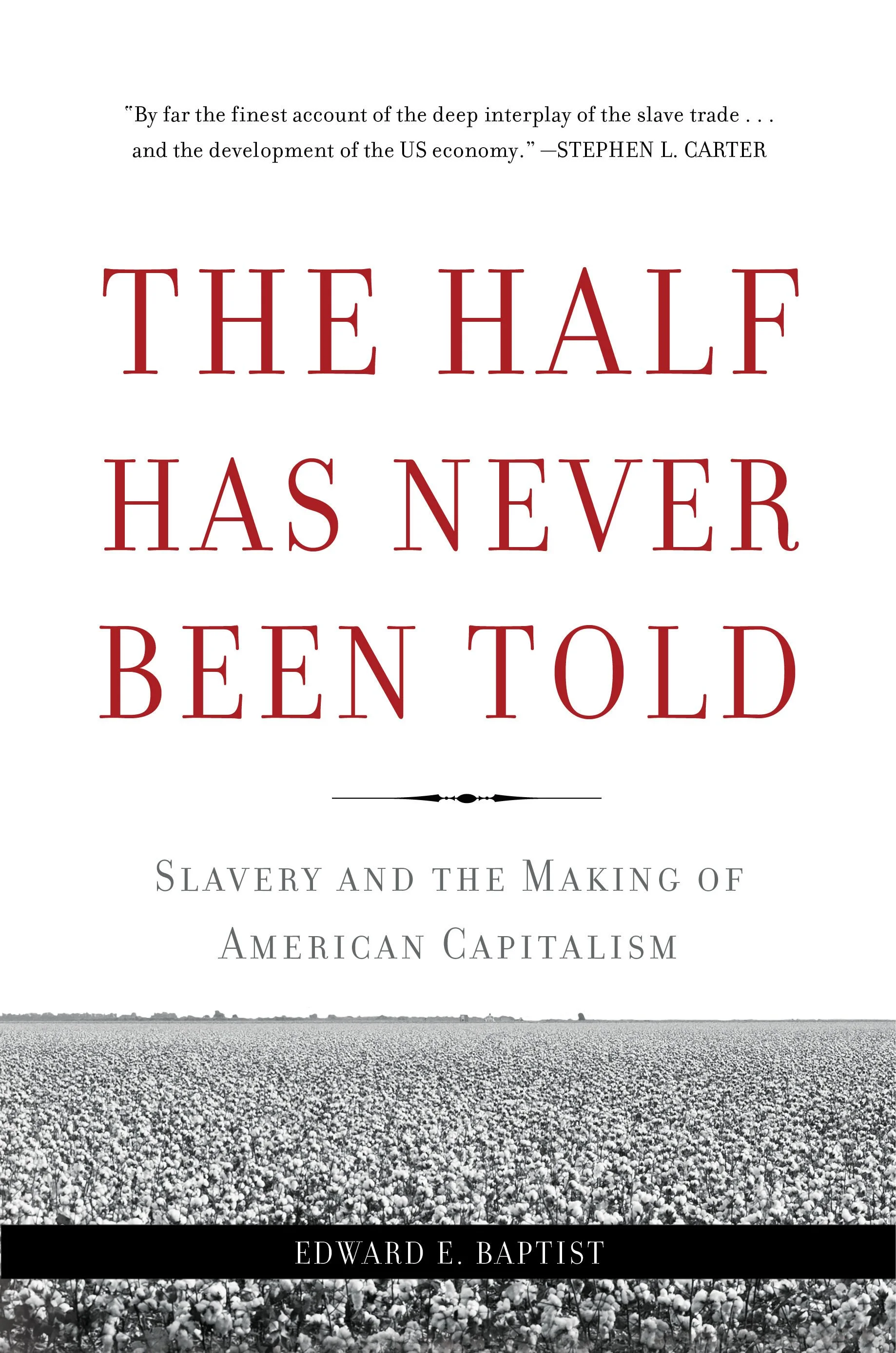
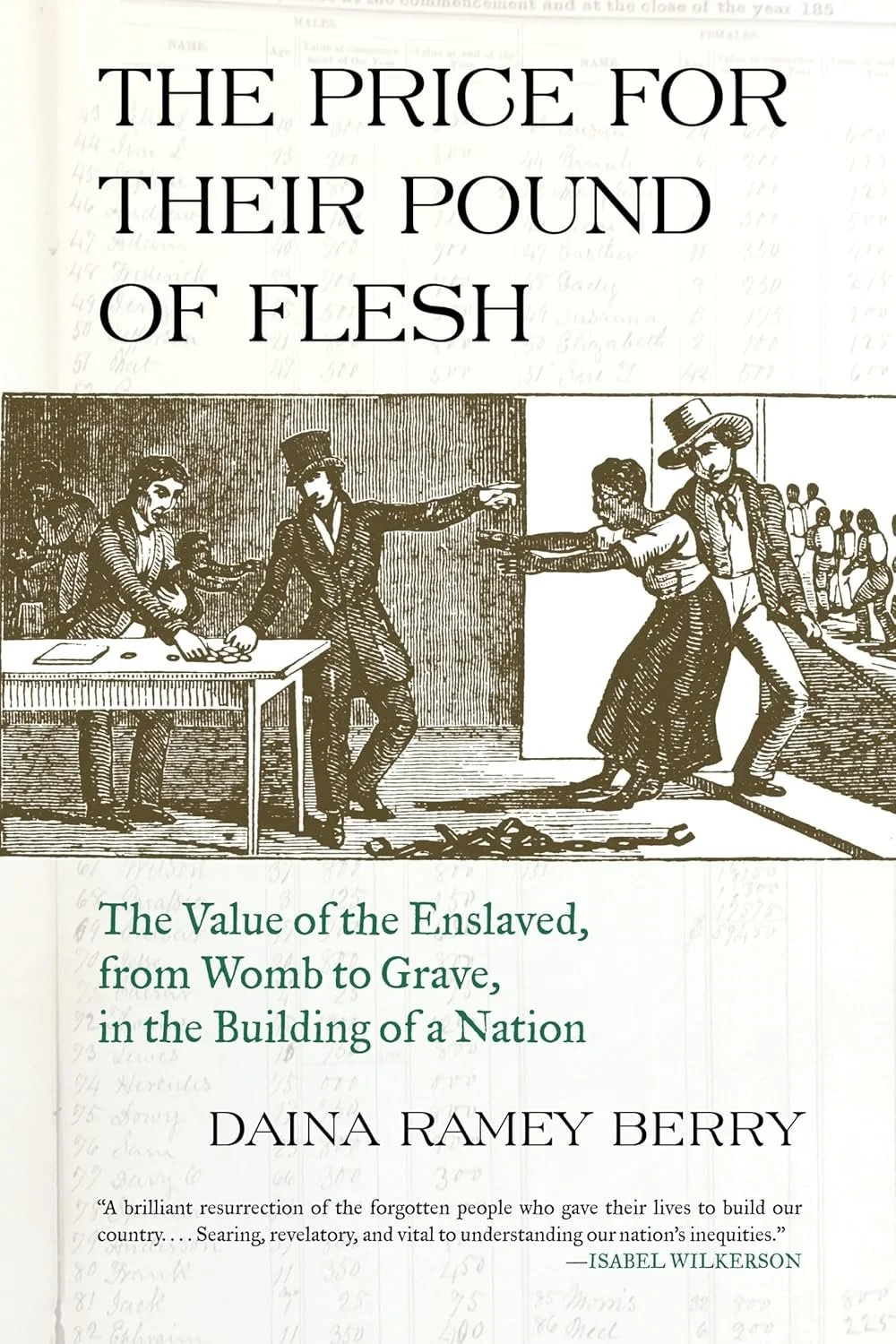
R E C O M M E N D E D R E A D I N G
N O T E S
¹ Deborah Gray White, Ar’n’t I a Woman? (New York: Norton, 1999), 68.
² Daina Ramey Berry, The Price for Their Pound of Flesh (Boston: Beacon Press, 2017), 103.
³ Thomas Jefferson, Farm Book, 1820 entry.
⁴ Jennifer L. Morgan, Laboring Women (Philadelphia: University of Pennsylvania Press, 2004), 14; Walter Johnson, Soul by Soul (Cambridge: Harvard University Press, 1999), 129.
⁵ Stephanie E. Jones-Rogers, They Were Her Property (New Haven: Yale University Press, 2019), 23.
⁶ Brenda Stevenson, Life in Black and White (New York: Oxford University Press, 1996), 66.
⁷ Harriet Washington, Medical Apartheid (New York: Doubleday, 2006), 55–60.
⁸ Benton Wishart and Trevon D. Logan, “Her Property Transactions: White Women and the Frequency of Female Ownership in the Antebellum Era,” National Bureau of Economic Research Working Paper No. 32529 (June 2024); see also Stephanie E. Jones-Rogers, They Were Her Property: White Women as Slave Owners in the American South (New Haven: Yale University Press, 2019).
