Learning to Know Again

An AI generated image of Black Santa in Durham, NC.

Kendall Dooley is a community development practitioner, scholar, and co-founder of BLK South, a nonprofit organization dedicated to reclaiming and revitalizing historic Black neighborhoods in the South. With a background in Criminal Justice and Missional Theology, Kendall brings a deep commitment to improving the quality of life in under-resourced communities through holistic development, cultural preservation, and creative place-making. His work is shaped by his passion for justice, Black history, and fostering spaces where communities can flourish on their own terms. Learn More
Erin and I often contemplate having a child. When we do, we often talk about being “one and done.” Our particular and precarious lifestyle—shaped by our convictions and callings—makes the decision very much up in the air. For some reason, while we were talking about it, she asked me if I would tell our kids Santa is real. Mind you, it wasn’t even Christmas time. I answered that I would tell them to research it and get back to me. She thought that was a very “me” answer. I’m not entirely sure what she meant, but there is something I enjoy about the process of coming to know something. There are certain concepts for which I trust the journey of discovery more than simply being told what to think.
Epistemology is the study of knowing—how we come to know something. Most people rely on their senses, basing what they know on what they can see, touch, taste, or smell. This is often referred to as an empirical way of knowing. In addition, many of us rely on what is passed down from family or community members we trust. In the Christian tradition, people often turn to Scripture or tradition as sources of knowledge. For many Christians, Scripture becomes the justification for belief: that homosexuality is a sin, that we should welcome the foreigner, that slavery was permissible, that Jesus came to save souls, or that Jesus came to save humanity. Debates over what the Bible communicates ultimately come down to interpretation—a point emphasized often in a community I’m part of called Street Psalms.
If the scriptural argument seems too shaky, the next line of defense is tradition: “This is not how Christians have historically understood this concept.” Tradition can feel promising, yet it becomes fraught when we consider how dominant Christian voices throughout history have excluded women, Black and Indigenous communities, queer people, and the poor. Tradition, in other words, has often protected the perspectives of those with power while ignoring the stories, wisdom, and lived experiences of those at the margins.
This is true of human knowledge in the Western world more broadly. Our ways of knowing tend to preserve the perspectives of the powerful, while the realities and stories of marginalized people are ignored or forgotten. One of the biggest perceived threats in America is the immigrant or the foreigner—perhaps because they offer us another way of knowing. From a scarcity mindset, this feels threatening. But from a mindset of abundance, it becomes an enormous opportunity.
One of the learning values at Neighborhood Ministries is this: Committed to “entering into” our community, we continually discover what we don’t know and what we desire to learn. We are committed to remaining in a posture of learning—being among, not standing over—acknowledging that change and growth are a process, not easily measured. Learning, and the sources from which we gather knowledge, is a lifelong journey. It involves unlearning, relearning, discovering new ways of knowing, and rejecting past ones that no longer serve us or our community.
When I led a theological lab in our home, what people became most curious about was Indigenous theology. What is the Indigenous way of knowing? I sensed a deep hunger for this because many felt betrayed by the Western ways of knowing they had inherited.
We read Indigenous stories together—stories that blurred and collapsed the line between fiction and fact. In one story, a man used his drum to communicate with a distant village, establishing peace between them. It was called his “Talking Drum.” Sitting with this story invited us to see how knowledge and truth operate differently outside Western assumptions. Perhaps there is something the child Erin imagined could reveal to me about Santa as they discover the best ways to know if something—or someone—is real. Maybe they would teach me a new way of discerning truth.
Seeking knowledge from marginalized communities exposes the limits of dominant traditions and reveals alternative ways of knowing—embodied, communal, land-based, and relational. While inherited traditions offer valuable insights, they remain incomplete precisely because they have excluded so many voices. The work of telling the full truth requires listening to those long silenced.
For me, this is one of the most compelling features of Jesus. He becomes the first victimized person to die and return to reveal that God’s solidarity is not with the dominant interpreters of tradition but with those who have suffered under it—and that their lives, voices, and experiences carry epistemic authority.
Reflection Questions:
How have the sources of knowledge you inherited—family, faith tradition, culture—shaped what you believe to be true, and where might those inherited frameworks limit your ability to learn from marginalized voices?
What might it look like to practice an “epistemology of discovery,” one that trusts the journey of learning—especially from communities outside dominant Western traditions—rather than relying solely on what you’ve been told?
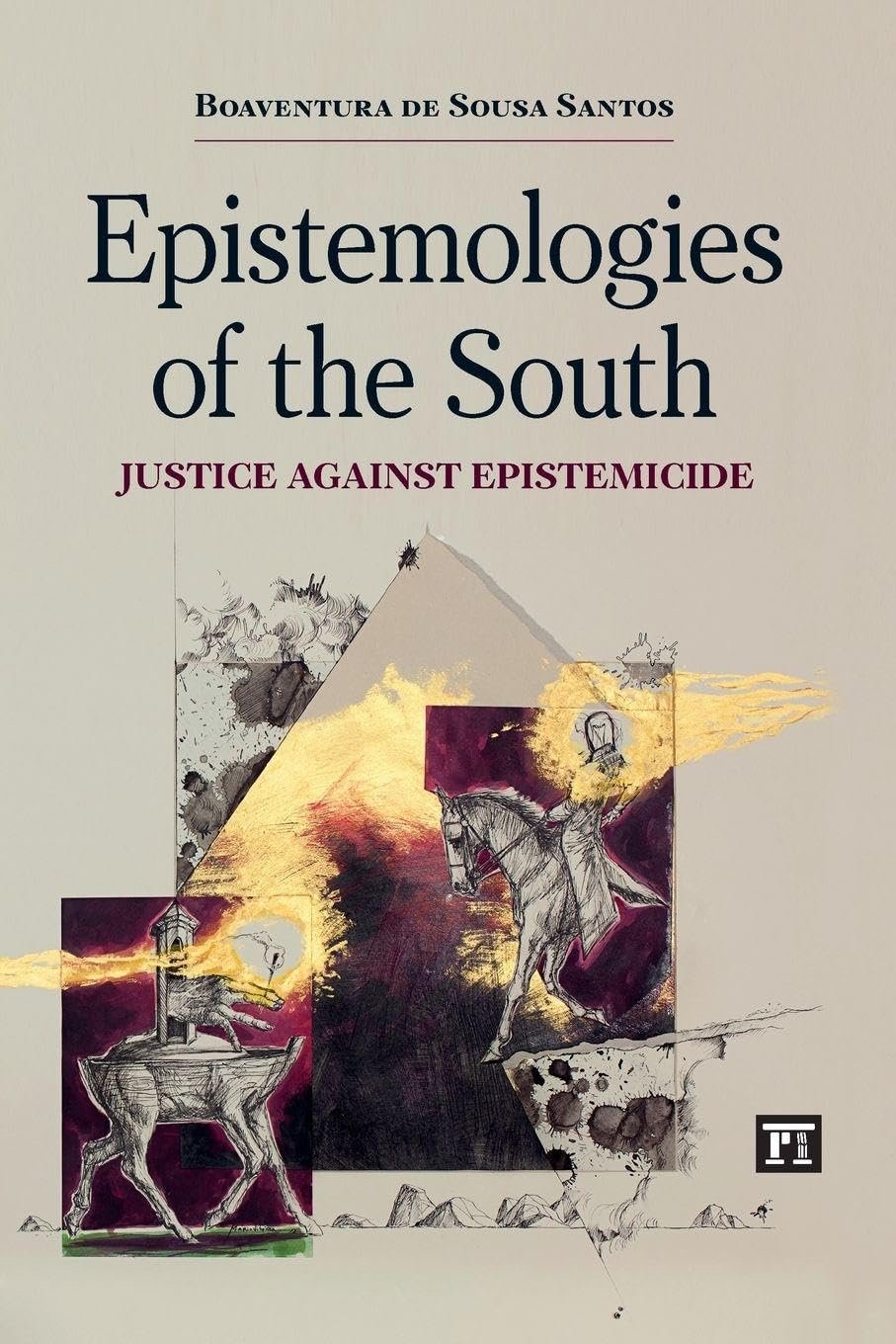
R E C O M M E N D E D R E A D I N G