Stories that Help Us Feel Again
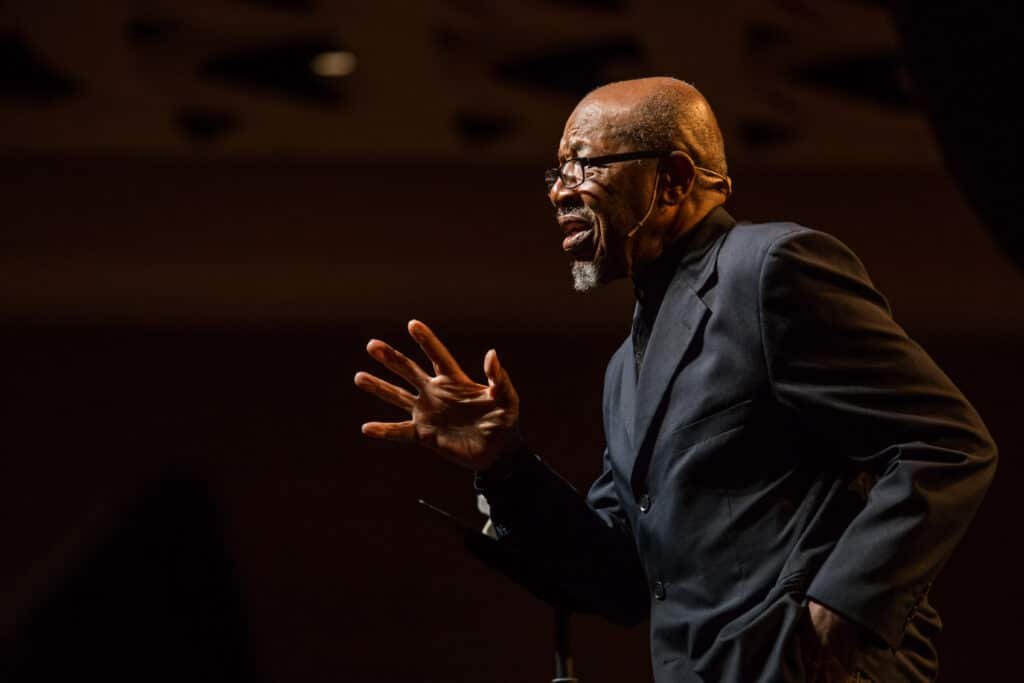
Image of Dr. John Perkins courtesy of CCDA.

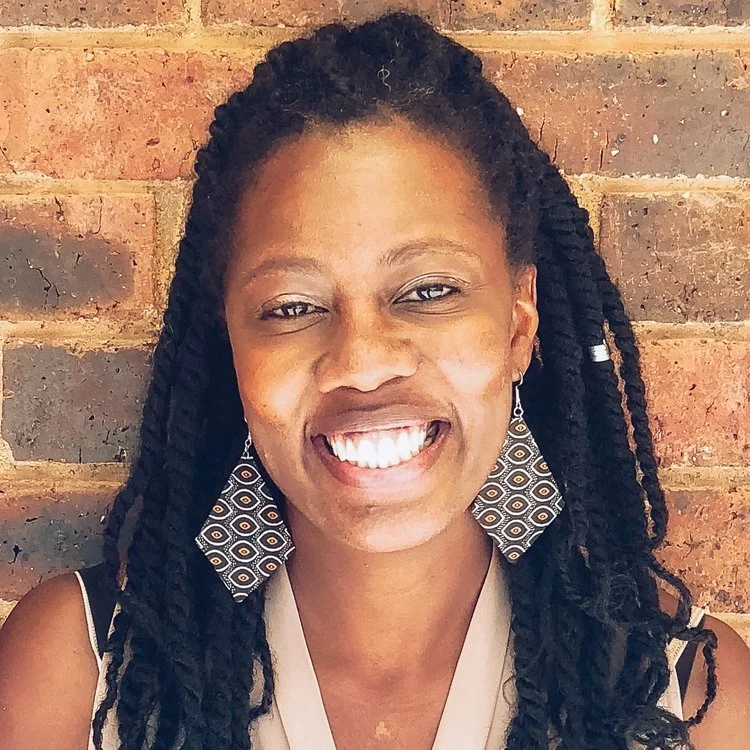
Shabrae Jackson is an expressive arts facilitator and educator. She is the founder of Collective Tapestry and co-founder of UMBRAL, leveraging arts-based approaches to foster healing, belonging, and social change. What we admire most about Shabrae is her deep trauma-informed perspective, which reflects her exceptional self-awareness, mindfulness, and care. We are honored to have her on the BLK South Board of Advisors. Learn More
“When all hope for release in this world seems unrealistic and groundless, the heart turns to a way of escape beyond the present order.” - Howard Thurman
When numbness sets in, it can be hard to take in the world. To feel.
In the last BLK reflection, Dr. Gould named the communal grief and sense of urgency honoring the many civil rights leaders who have recently passed. And just a day after her newsletter posted, we lost another icon this past Friday in Dr. John Perkins. Dr. Perkins voice and work was formational for me over many years as he was for many.
Before hearing of this latest passing, I attended a “People, Power and Change” meeting with local community leaders to practice sharing our public narrative stories. The stories for why we do what we do, the moments in time that called us into our vocation. The focus was on finding our stories for when situations and life circumstances brought us onto a new path.
During the workshop, I had difficulty locating my story within my current season of life, still at times feeling unrooted locally but feeling connected to numerous spaces globally. My mind felt scattered and I had garbled words, or even too many words that felt out of place. I spoke honestly with the group that I was unsure of which story to tell. I invited them to follow my words to see if sharing in community might help.
After what seemed to be an unwieldy path and some quick turns and skips, something seemed to come out of my mouth. How coherent it was, I could not say. But somehow those who were with me in the space seemed to follow me. They nodded their heads and graciously provided a witness and mirrored back to me what they sensed and heard. They helped me to provide form to that which was still trying to emerge and felt formless.
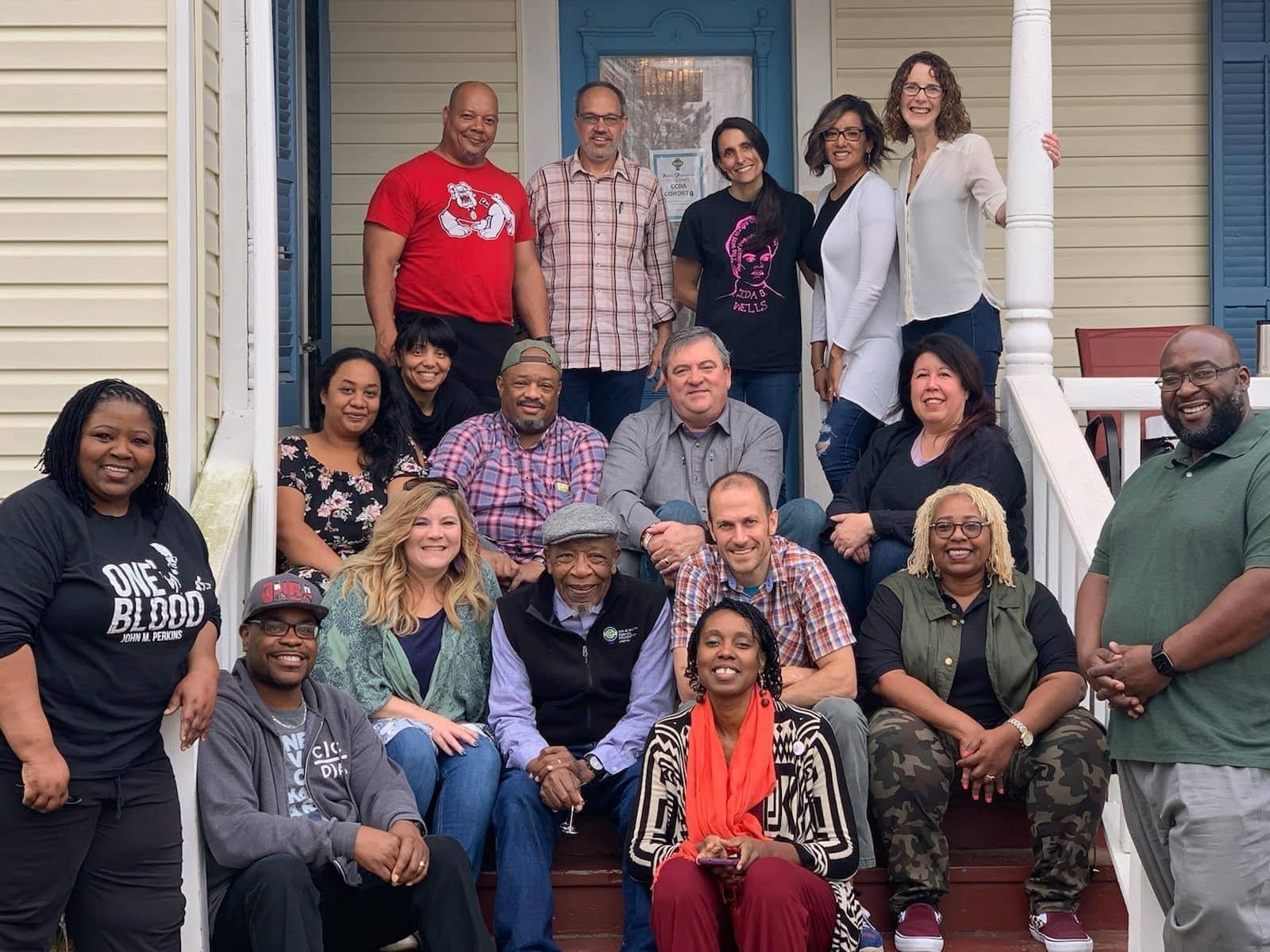
Dr. John Perkins and CCDA’s Cohort 8 at his home in Jackson, Mississippi
"You are your own stories and therefore free to imagine and experience what it means to be human." — Toni Morrison
When story emerges it can soothe numbness open up feeling and a sense of hope. This is not a shallow optimism that insists everything will be fine, but something deeper — the felt sense that possibility exists. Even the act of making something with our hands — shaping clay, stitching fabric, building something from raw material — participates in this. When we create forms, we enact the belief that formlessness need not be the final word. We make space for what might be.
Many spiritual and mystical traditions have understood this intuitively. Across cultures and centuries, story has been held as sacred — not simply as a way of passing time, but as a way of opening the heart, bearing witness, and carrying truth across generations. Story creates space for testimony: for the voice that says this happened, I was there, it mattered.
The scriptures carry within them a call to remember as a spiritual discipline. To remember the stories of deliverance, to remember how one moved towards healing, or freedom, or how a family came to be. Stories help to orientate, reminding us that difficulty has a shape — that it moves, and that others have moved through it before us. They build empathy, shifting the distance between self and the other.
And as we live in days in which many types of stories are being told, stories of who can belong, who can survive, and whose deaths are worthy, we need stories that sustain community and remind us what it means to be human.
The meaningful stories that must be shared around the table, at the barbershop, on the court, in the car, in the fellowship hall, and on the front stoop; stories that help us to laugh, mourn and regain purpose and steadiness in the midst of uncertainty.
Stories can also sustain us privately, in quieter ways. When we read a book before sleep, or gather around a film, or pass down a family tale, we are doing something ancient and essential: we are weaving ourselves back into the larger fabric of human experience. We are reminding ourselves that we are not alone, that what we feel has been felt before, and that it is possible — even in difficulty — to continue.
Perhaps inspired by the Grant Street Ladies that Kendall and Erin are connected to, tomorrow I will be joining for story sharing in my community to witness the stories of five longtime Osborne community residents share what it meant to grow up in the segregation era in Lake Worth, FL. Our stories will not be erased.
Perhaps there are ways to hold numbness with story.
Reflection Questions:
What stories help to sustain you?
What are the new stories that need to emerge today?
You can also support the storytelling as BLK South premieres the documentary; Celebrating Grant Street on April 18th.
R E C O M M E N D E D R E A D I N G