Taste and See
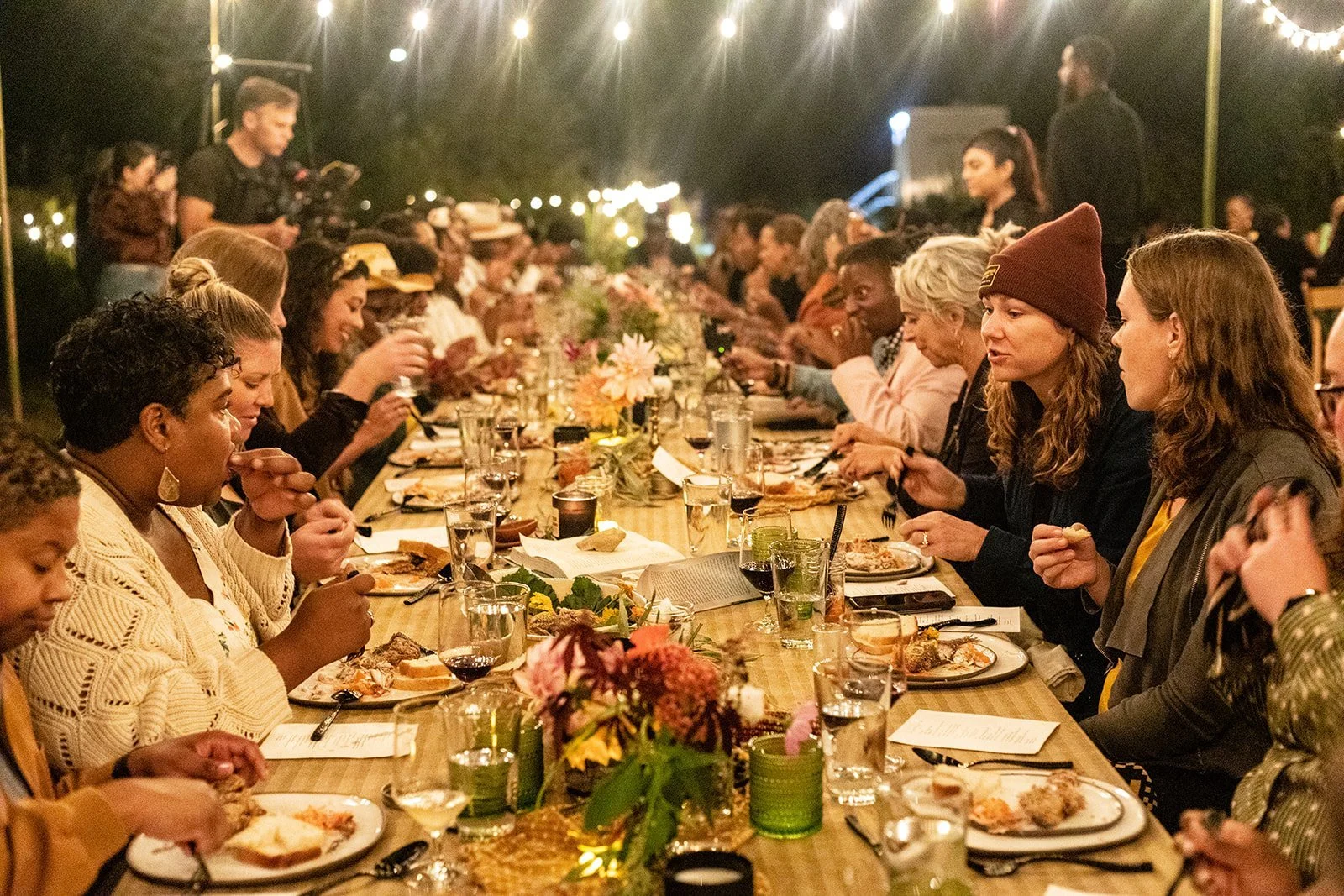
Photo Credit: Founded by Gabrielle Etienne, Revival Suppers is a North Carolina–based supper club rooted in AfroCarolina Folk culture, storytelling, and seasonal heritage ingredients. Each gathering celebrates the foodways of the African Diaspora and the American South through relationships with BIPOC farmers, seed stewards, and local food traditions.

Shabrae Jackson is an expressive arts facilitator and educator. She is the founder of Collective Tapestry and co-founder of UMBRAL, leveraging arts-based approaches to foster healing, belonging, and social change. What we admire most about Shabrae is her deep trauma-informed perspective, which reflects her exceptional self-awareness, mindfulness, and care. We are honored to have her on the BLK South Board of Advisors. Learn More
There are moments when you taste something and take in the flavors of the spices and deepness of the dish that is so good it becomes a whole body experience.
Then there are the other moments when you taste something and you notice something is off. Maybe it’s the smell, the texture, or you can tell that an ingredient is missing. And sometimes, it’s just plain nasty.
But to know, you have to taste it, you have to try it, or at least take it in through your nose. Our sense of smell may detect something even before it enters our mouth. Every flavor carries a story: soil, water, sunlight, labor, and care; inviting us to acknowledge that we are supported and sustained by many hands, communities and ecological families beyond ourselves. Certain flavors evoke memory, comfort, or belonging, reconnecting us to people, places, and moments that shaped us.
During black history month, the story of soul food is often recounted. Stories of those who used the scraps of food that was given, the throw aways, the discarded, and turned it into delicious dishes that were sustaining. They had to create something new out of what was given, resilience and resistance in action as the scraps were transformed. Cooking and eating became the few spaces where autonomy could exist, grounding oneself in one’s own humanity when every system worked to deny it. The flavors carried memory across generations even when language, land, and family were distant.
My own mom recalls when she arrived in Michigan, migrating north from Louisiana at the tale end of the great migration, “the food tasted different and the meat wasn’t the same.” In her stories, she always notes how she had to find other ways to use the spices that she had learned from her mom and her older sisters to find the taste of home. “Cooking is an instinct, a knowing that you learn as you do it, my mom often says. She learned to cook with other tasting meat in a new space in the north, remaking home again and again.
The sense of taste is often treated as ordinary, or something we don’t think about it until we lose it. When approached with intention, sensing through taste can become a quiet spiritual practice as it pulls us out of abstraction and places us firmly in the body, asking us to slow down and notice what is actually happening in the here and now. In a world that constantly urges us to rush, eat quickly, and move on, paying attention to taste is a gentle act of resistance. It reminds us that being alive is not just about thinking or producing, but about receiving and experiencing.
When we eat mindfully, taste becomes an anchor to the present moment. The first bite of food—whether sweet, bitter, salty, sour, or savory—demands awareness. It interrupts mental noise and invites us to focus on sensation. Practiced regularly, attention to taste becomes a quiet ritual woven into daily life. It does not require special training, unique objects, packaged deals or long periods of silence, only presence.
It also creates an opportunity to gather with others, to be nourished by what we eat and by those who share the table with us. It invites space for storytelling, for remembering and for sharing dreams.
Today, may we taste and see…. may we continue to practice the art of finding the people, spaces and practices that help us to stay well and whole. To surround ourselves with others who carry love and hope, like a savory meal that tastes oh so good and satisfies the body and soul. And every time that you taste, notice what goes down easy, what needs a bit more seasoning, and create something new from the scraps, in this way we create a generative story each day, forming more possibilities to come alive for the future.
Reflection Questions:
How might you invite the practice of taste as a ritual at your next meal?
What is helping you to stay well and whole in these days and how might you share this with others, creating nourishment for all?
Final practice: find a traditional soul food restaurant in your neighborhood or community and spend your dollars there supporting the owners and celebrating the genius of soul food.
R E C O M M E N D E D R E A D I N G