When History Rhymes

Kendall Dooley is a community development practitioner, scholar, and co-founder of BLK South, a nonprofit organization dedicated to reclaiming and revitalizing historic Black neighborhoods in the South. He holds a bachelor’s degree in Criminal Justice and Criminology, a Master of Arts in Missional Theology, and a Master of Theology. Kendall brings a deep commitment to improving the quality of life in under-resourced communities through holistic development, cultural preservation, and creative placemaking. His work is shaped by his passion for justice, Black history, and fostering spaces where communities can flourish on their own terms. Learn More
The theme of this season’s reflections is aphorisms, quotations, and proverbs that have been meaningful to us.
“History doesn’t repeat itself, but it often rhymes.”
—Often attributed to Mark Twain
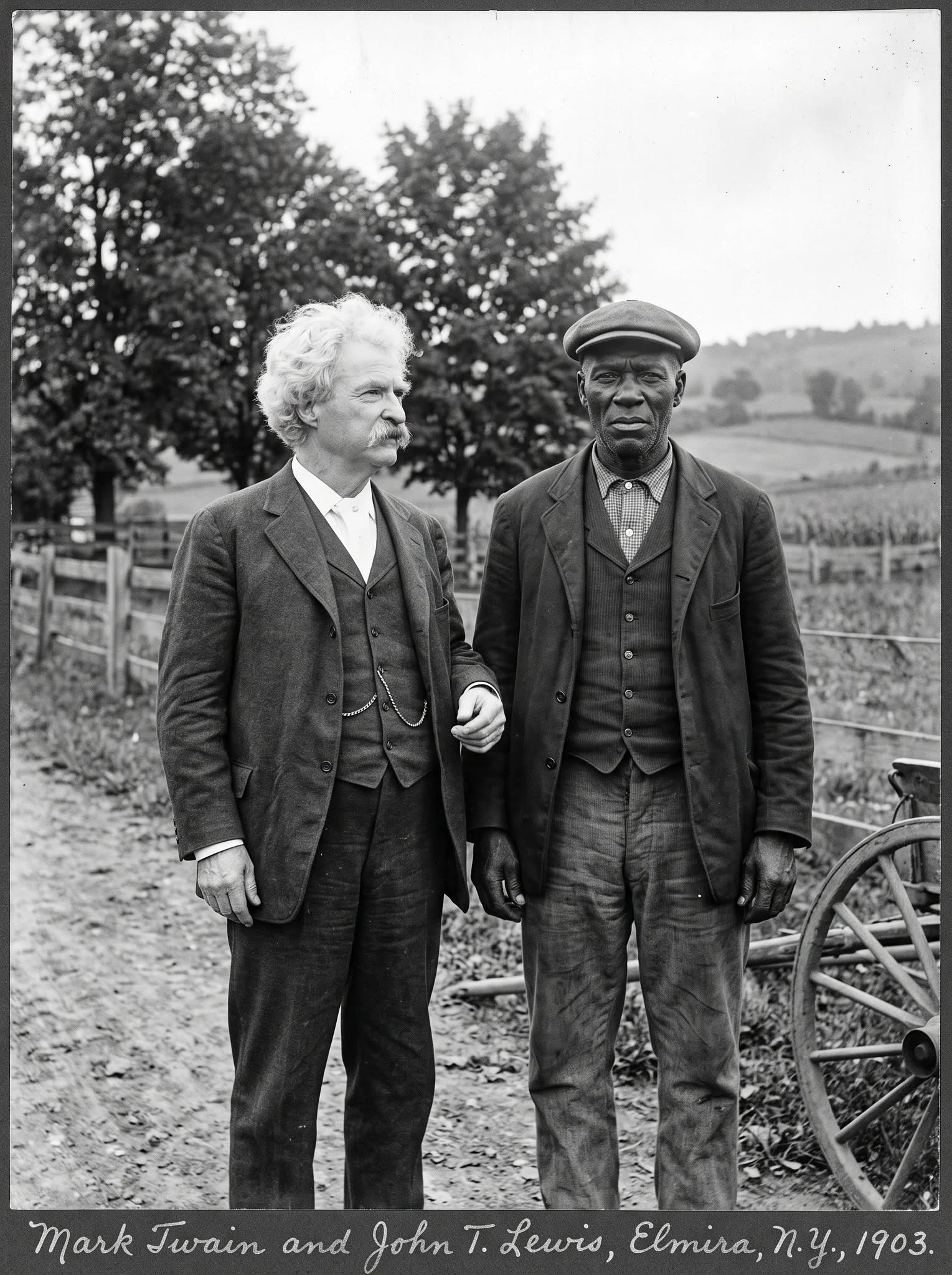
I would have liked to begin this season of BLK South’s weekly reflections with a quote from a Black American. Honestly, however, this is the one that has been sitting with me. I cannot seem to shake it. Often attributed to Mark Twain—but also to others before him, revealing the difficulty of keeping track of history—the quote sparks something in me: history is not always the same, but it is often familiar.
I have always been drawn to poetry and spoken word—the inflection points, the drawn-out words, the rhymes. Yet poetry has always remained elusive to me. Despite this, the quote stirs within me the belief that, for generational healing to take place and historical wounds to be mended, we need poets who understand the rhyme of history. We need poets of history.
These poets are interpreters and discerners of the times—people who can recognize patterns echoing from the past. This may apply to family history, U.S. history, the history of our faith and spirituality, human history, and more.
One practice I learned in a poetry course was the skill of close reading: examining each word—not only its meaning, but also the feelings it elicits and the sounds it makes. I believe poets of history understand what the words and rhyme schemes of a historical moment are attempting to accomplish because they recognize similar patterns from the past. I also believe they know that no word is ever final. There is always another word to be spoken and another rhyme to be made. There is always the possibility of a future in which the rhymes are made anew, leading us toward healthier and more humane ways of living with one another.
For us to heal from colonialism, urban renewal, and other forms of historical harm, we must learn to recognize the sounds, feelings, and meanings of old, destructive rhythms—even when they are masked as something new and different.
An elder in our neighborhood often shares that it was not solely white city leaders who participated in the destruction of the neighborhood through the construction of the highway. “Our own people” participated, she says. Black elites also played a role in selling the neighborhood because they owned some of the homes that poorer Black residents rented.
Understanding this history as a rhythm matters.
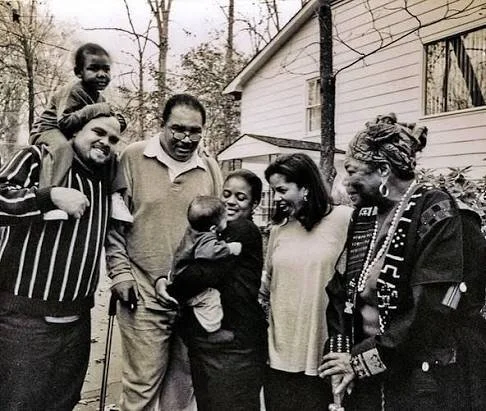
Dr. Maya Angelou with her great-grandchildren, Caylin and Brandon, her son Guy, grandson Colin, granddaughter-in-law Jessica, and daughter-in-law Stephanie — captured in two special family moments, celebrating the love and legacy that span generations.. | Photo Credit: Instagram
In Erin’s and my story of reverse migration, we continue to be shaped by the place where we live and grafted into the story of this city and neighborhood. To be a poet of history, I have a responsibility to faithfully and tactfully recognize the sounds and signs of these rhythms. For me, serving a place and people I love means engaging in the elusive act of poetry and trusting my instincts when I notice old, familiar patterns.
Perhaps the difficulty lies not only in recognizing the words and rhythms of the moment, but also in finding the courage to name those rhythms for what they are.
This is where I believe a true poet and wordsmith, Maya Angelou, can help us—or at least help me—as I give her the final word. Her life and the words below remind me that the world needs poets of history who are courageous enough to face the rhythms of the past, name them in the present, and help create something new for the future:
“History, despite its wrenching pain, cannot be unlived, but if faced with courage, need not be lived again.”
—Maya Angelou
Reflection Questions:
What rhythms of history feel obvious to you? Why do you think they are so recognizable?
What rhythms in your own life have you had the courage to face—or do you hope to find the courage to face?
RECOMMENDED READING